

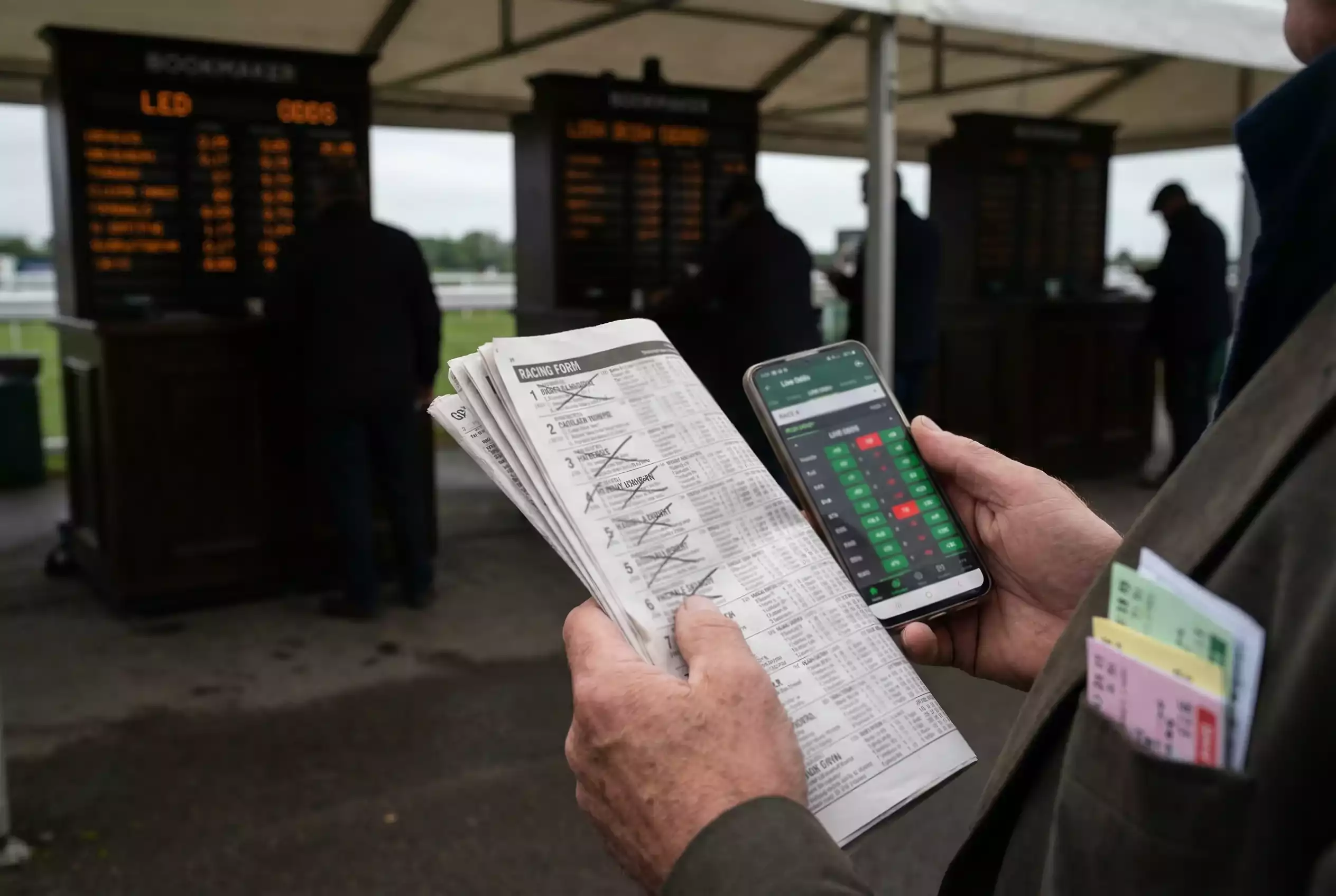
Most punters treat a non runner as an inconvenience — a disruption to the plan, a source of Rule 4 frustration, something to be endured rather than exploited. That reaction is understandable but wrong. A non runner is new information arriving in real time, and new information creates mispricing. Mispricing is where money is made.
The market does not adjust instantly or efficiently when a horse is withdrawn. Bookmakers reprice mechanically, exchange prices lag, and the crowd overreacts or underreacts depending on how well they understood the race before the withdrawal. In that window — sometimes five minutes, sometimes thirty — there are opportunities that did not exist sixty seconds earlier. The smart move is not to ignore the non runner. It is to be the person who processes the change faster and more accurately than everyone else in the market.
This article covers the strategic toolkit: market movement patterns, field size effects, draw recalculations, pace analysis, accumulator adjustments, exchange tactics and bankroll management. Each section gives you a framework for turning a withdrawal into an edge rather than a loss. None of it requires inside information or exotic data — just faster thinking and a clearer process than the average punter brings to race day.
How the Market Reacts in the First 15 Minutes After a Non Runner
When a non runner is announced, the market reprices in stages — and the first stage is almost always an overcorrection. The withdrawn horse’s implied probability has to be redistributed across the remaining field, and the initial redistribution tends to be crude. Bookmakers shorten the second favourite aggressively, the exchange market compresses, and outsiders drift or are ignored entirely. The result is a temporary pricing error that lasts until sharper money arrives to correct it.
The pattern is consistent enough to be useful. If the withdrawn horse was the favourite, the second favourite typically shortens by more than the probability transfer justifies. This happens because casual money that would have gone on the favourite floods into the next obvious option, pushing its price below fair value. Meanwhile, other horses in the field — those whose chances genuinely improved because of the withdrawal — may not shorten at all, or may actually drift if the market attention is focused elsewhere. That is where the value sits: in the horse whose chances improved but whose price did not reflect it.
The timeframe matters. In the first five minutes, prices are volatile and unreliable. Between five and fifteen minutes, the sharpest bettors on the exchange are correcting the initial moves, and a clearer picture forms. By the time thirty minutes have passed, the market has largely settled into a new equilibrium. If you are going to act on a non-runner repricing, the window is roughly five to twenty minutes after the announcement — early enough to catch the mispricing, late enough that the wildest swings have passed.
This dynamic sits against a backdrop of declining liquidity. The average amount bet per race fell approximately 8% year-on-year through 2024/25, according to the HBLB Annual Report. “The Board is itself not privy to the commercial information around individual bookmakers’ businesses. However, it is clear that there has been a material change in the industry environment with turnover down by around 20% in two years,” noted Alan Delmonte, HBLB Chief Executive. Thinner markets mean larger price distortions after a non runner, which cuts both ways: the mispricings are bigger, but the liquidity to exploit them may be shallower.
Smaller Field, Different Race — What Reduced Numbers Mean for Value
A non runner does not just remove a horse from the field — it changes the nature of the race. A twelve-runner handicap is a different tactical proposition from a ten-runner handicap, and the differences extend beyond the obvious reduction in competition.
Smaller fields favour different running styles. With fewer horses, there is less traffic, fewer positional problems, and more room for prominent racers to control the pace. Hold-up horses that relied on a large field to provide cover and a fast pace to close into may find the race run at a slower tempo, which negates their finishing kick. The withdrawal of even one or two runners can tilt the stylistic balance of the entire race.
Field size also affects the overround — the bookmaker’s built-in margin. In a large field, the overround is typically higher because there are more runners to price, and each price carries a small margin. When runners are removed, the overround should contract, meaning the remaining prices become fairer in aggregate. In practice, bookmakers do not always adjust the overround cleanly; they may tighten the favourite and leave the outsiders’ prices unchanged, which means the margin shifts rather than shrinks. Spotting where the margin has been left in the wrong place is a source of value.
The data shows a broader structural trend. The total number of horses competing in British racing dropped to 18,452 in 2024, down 178 from the previous year. On the Flat, field sizes at Premier racedays improved slightly, but Jump Premier field sizes fell from 9.69 to 9.22, reflecting the combined pressure of fewer horses in training and higher non-runner rates on testing ground, as reported by the BHA. Smaller fields are becoming more common, which means the skills needed to assess reduced-field races are not niche — they are increasingly core to everyday race-day betting.
The smart move in a reduced field is to reassess rather than react. Do not simply shorten your estimate of every remaining horse proportionally. Ask which horse specifically benefited from the withdrawal — was the non runner its main market rival, its pace companion, or an irrelevant outsider? The answer determines whether the remaining field is genuinely more competitive or just smaller.
Recalculating Draw Advantage After a Withdrawal
On Flat courses with a straight track or a sharp turn close to the start, the draw is a material factor — and a non runner changes the draw map. When a horse is withdrawn, its stall is not removed from the starting gate. The remaining horses keep their original stall numbers, but the gap left by the non runner alters the spacing and, on certain courses, the tactical dynamics of the break.
The effect is most pronounced on sprint courses where the rail position matters. At courses like Chester, where the tight left-hand bend favours low draws, the withdrawal of a horse drawn in stall one or two can reduce the perceived advantage of the inside rail. Conversely, if an outsider drawn wide is scratched, the high-draw horses lose a buffer that was absorbing part of the wide-draw disadvantage. Each withdrawal subtly recalibrates the positional value of the remaining stalls.
The market rarely prices this in quickly. Draw bias is already an underweighted factor in most bookmaker pricing — the algorithms adjust for form and market sentiment more readily than for stall position. After a non runner, the draw adjustment is even slower, because it requires understanding of the specific course geometry and how the gap affects the break. This is analytical territory where a punter with course-specific knowledge has a genuine advantage over both the bookmaker’s automated pricing and the crowd’s instinctive reaction.
The practical approach: if a non runner is drawn adjacent to your selection, assess whether the gap helps or hinders. A horse drawn in stall five that was sandwiched between two prominent racers may now have more room to settle into position. A horse drawn in stall twelve that was already wide may not benefit at all. The recalculation is case-specific, not formulaic — and that specificity is exactly what makes it an edge, because most bettors will not bother to do it.
On courses where draw bias is negligible — large galloping tracks like Newbury or Doncaster’s straight mile — the withdrawal’s effect on draw dynamics is minimal. Save the draw analysis for courses where stall position demonstrably correlates with strike rate, and focus your energy where the edge is largest.
Pace Analysis — When a Front-Runner Drops Out
Pace is the invisible architecture of a horse race, and a single non runner can collapse it. If the withdrawn horse was the expected front-runner — the one who would have set the tempo, led the field into the straight and ensured an honest gallop — the entire race shape changes. What was a truly run race becomes a tactical crawl, and the horses that benefit are not necessarily the ones the market favours.
When a pace-setter is removed, the most likely outcome is a slower early tempo. Without a natural leader, the remaining runners jockey for position, nobody wants to commit to the front, and the pace drops. This favours horses with a strong finishing kick — closers and hold-up performers who thrive when the race develops into a sprint finish rather than a stamina test. It disadvantages horses whose form was built on following a strong pace and picking up the pieces in the final furlong.
The opposite scenario also matters. If the withdrawn horse was a hold-up performer — one that sat at the back and closed late — the race may become more straightforward for the front-runners. With one fewer closer to worry about, a prominent racer might go unchallenged for longer, building an unassailable lead while the remaining closers wait for a pace injection that never comes.
Pace maps — visual representations of each horse’s likely running position — are published by several form analysis services and can be constructed manually from past running styles. After a non runner, redrawing the pace map takes two minutes and tells you immediately whether the withdrawal has tilted the race toward speed or stamina. If the pace map shifts significantly, the pre-withdrawal prices no longer reflect the race that will be run, and the window for finding value is open.
Jump racing adds another dimension. Over obstacles, pace affects jumping rhythm. A horse that jumps best at a strong gallop may struggle in a slowly run race because it approaches the fences at an uncomfortable speed. The removal of the horse that would have ensured a genuine test of jumping ability can alter the error rate across the entire field — more mistakes, more fallers, and a result that looks less like form and more like chaos. The smart move is to identify the pace scenario before the non runner and after, and adjust your assessment of each horse’s chances accordingly.
Spotting Value in Late Non Runner Markets
Late non runners — those declared within the final hour or two before a race — create the sharpest opportunities because the market has the least time to adjust. The bookmaker reprices, the exchange reacts, but the casual betting public may not even be aware of the change. If you are watching the declarations in real time, you have a window that most participants are not using.
The key is preparation. Before the first race on any card, identify the horses in each subsequent race that you consider most at risk of withdrawal — those entered on ground that does not suit them, from yards with recent illness, or showing market drift that suggests informed money is stepping away. If one of those horses is indeed scratched, you already have an opinion on how the race changes. You are not starting your analysis from scratch; you are executing a contingency plan.
Late withdrawals also affect the place market disproportionately. In a twelve-runner handicap paying four places, the withdrawal of two runners may reduce the field to ten, and some bookmakers will cut the number of places from four to three. This changes the each-way proposition fundamentally — the place portion of your bet now covers fewer positions, and the expected value of the place bet drops. If you are betting each-way, check whether your bookmaker adjusts place terms after non runners, because not all of them do, and those that do may not do it immediately.
The information chain matters too. Racing Post, Betfair, and individual racecourse social media accounts all announce non runners, but the speed varies. The official BHA feed is the definitive source, and it sometimes lags the on-course announcement by a few minutes. Punters who follow course-specific Twitter/X accounts or have push notifications enabled from data providers see the withdrawal before it hits the main platforms. Those few minutes of lead time are where the sharpest value exists.
Adjusting Your Accumulator After a Non Runner
Accumulators and non runners have a relationship that most punters accept passively. A horse is withdrawn, the leg is voided, the accumulator becomes a smaller accumulator, and the payout contracts. The standard response is a shrug. The smart move is to treat the void leg as a decision point, not a fait accompli.
When a leg is voided, the remaining accumulator runs at reduced odds. A five-fold becomes a four-fold, and the potential return drops accordingly. But the remaining four legs were selected in the context of a five-fold — the risk-reward profile was calibrated to a larger bet. With one leg removed, the remaining bet may no longer meet your criteria for an accumulator. If the voided horse was your strongest selection, the one that anchored the ticket, the surviving four legs may represent a weaker overall proposition than you originally intended.
The alternative is to replace the voided leg. Some bookmakers allow you to edit an existing accumulator after a non runner — adding a new selection to restore the original number of legs. Others do not, which means you would need to cash out the existing bet (if available) and place a new five-fold. The maths of cash-out pricing is not always favourable, but it gives you the option to restructure rather than passively accept a reduced bet.
Multiple non runners in the same accumulator compound the problem. Two void legs in a five-fold leave you with a treble — a fundamentally different bet type with different variance and different expected value. At this point, the smart move may be to take whatever cash-out value is offered and regroup. Holding a treble that was designed as a five-fold is not discipline; it is inertia.
NRNB accumulators exist at some bookmakers for selected meetings, but they are rare. The standard treatment is void-leg reduction, and understanding that this is the default — rather than expecting NRNB to cover accumulator legs — prevents costly misunderstandings. If you build accumulators regularly, factoring in the probability of a void leg is part of the initial construction. On cards where non-runner risk is high — winter Jump meetings on soft ground — a smaller accumulator with stronger individual selections is more robust than a large accumulator with marginal legs that are likely to be withdrawn.
Exchange Tactics — Laying, Trading and the NR Void
The betting exchange is the natural habitat for non-runner strategy, because it offers tools that traditional bookmakers do not: the ability to lay, to trade in-running, and to exploit the structural differences in how exchanges handle withdrawals.
The most direct tactic is laying a horse you believe is likely to be withdrawn. If you lay Horse A at 5.0 on the exchange and it is subsequently declared a non runner, the bet is voided — your lay liability disappears, and you keep whatever profit you may have already locked in through trading. This is not risk-free: if the horse runs and wins, you pay out. But for horses where the non-runner risk is elevated — those entered on unsuitable ground, from a yard with known illness, or drifting in the market — the expected value of the lay can be positive, because the probability of withdrawal is higher than the market implies.
Trading around a non runner requires more precision. If you backed Horse B at 6.0 before a non runner was announced, and the withdrawal causes Horse B to shorten to 4.0, you can lay Horse B at 4.0 to lock in a profit regardless of the result. The guaranteed profit is the difference between the back and lay prices, adjusted for stake. This is standard green-book trading, but non runners provide the catalyst — the price movement that creates the trading opportunity. Without the non runner, the price might not have moved enough to trade profitably.
The Betfair Reduction Factor interacts with these tactics. As noted in Betfair’s exchange rules, if a withdrawn horse carries a Reduction Factor below 2.5%, no adjustment is made to remaining bets. This means longshot withdrawals on the exchange are cleaner than with traditional bookmakers, where even a minor non runner triggers a 5p Rule 4 deduction. For strategies that involve backing multiple runners in the same race — dutching, for instance — the exchange’s higher threshold for adjustments preserves more of your margin.
Exchange liquidity is the constraint. On high-profile races — Cheltenham, Ascot, the National — exchange markets are deep enough to execute these tactics at meaningful stakes. On midweek handicaps at Catterick, the liquidity may not be there. Matching a £200 lay on a horse in a low-profile race can take minutes or hours, by which time the opportunity has passed. The smart move is to align your exchange strategy with the liquidity profile of the meeting: aggressive tactics on big days, simpler approaches on quieter cards.
Bankroll Considerations When Non Runners Hit Your Card
Non runners affect your bankroll in ways that are not immediately obvious, and the cumulative impact over a season is larger than most punters track. Every Rule 4 deduction shaves profit. Every voided accumulator leg reduces expected return. Every late withdrawal that forces you to re-bet at worse odds costs marginal value. Individually, these are small. Over hundreds of bets, they compound.
The first discipline is to track your deductions separately. If you use a spreadsheet or a tracking app for your betting, add a column for Rule 4 deductions applied. At the end of the month, sum them. Most recreational punters have never done this and would be surprised by the total — it is not unusual for Rule 4 deductions to cost several percent of gross profit over a season of active betting.
The second discipline is staking adjustment. On days when non-runner risk is high — soft-ground Jump cards, meetings with known yard illnesses, festivals where the field is volatile — consider reducing your unit stake. The logic is straightforward: if the probability of a deduction or a voided bet is elevated, the expected return per unit staked is lower, and your staking should reflect that. This is not a retreat from betting; it is a calibration of position size to conditions, the same principle that any professional in any market would apply.
The third consideration is opportunity cost. When a non runner reshapes a race and you decide to re-bet at new odds, you are deploying capital into a proposition that was not in your original plan. That is fine if the new proposition meets your criteria — but if you are re-betting out of habit or frustration, you are burning bankroll on decisions driven by emotion rather than analysis. The smart move, sometimes, is to walk away from a race that a non runner has turned into something you do not have a strong view on. Preserving capital for the next genuine opportunity is a strategy in itself.
Over a full season, the punters who manage non-runner impact best are those who treat it as a systematic variable, not a random annoyance. They track it, adjust for it, and factor it into their staking models. The withdrawal is out of your control. Your response to it is not.
Non Runners Betting Strategy — More on this topic at non runners horses today.
See also Non Runners Articles.
