

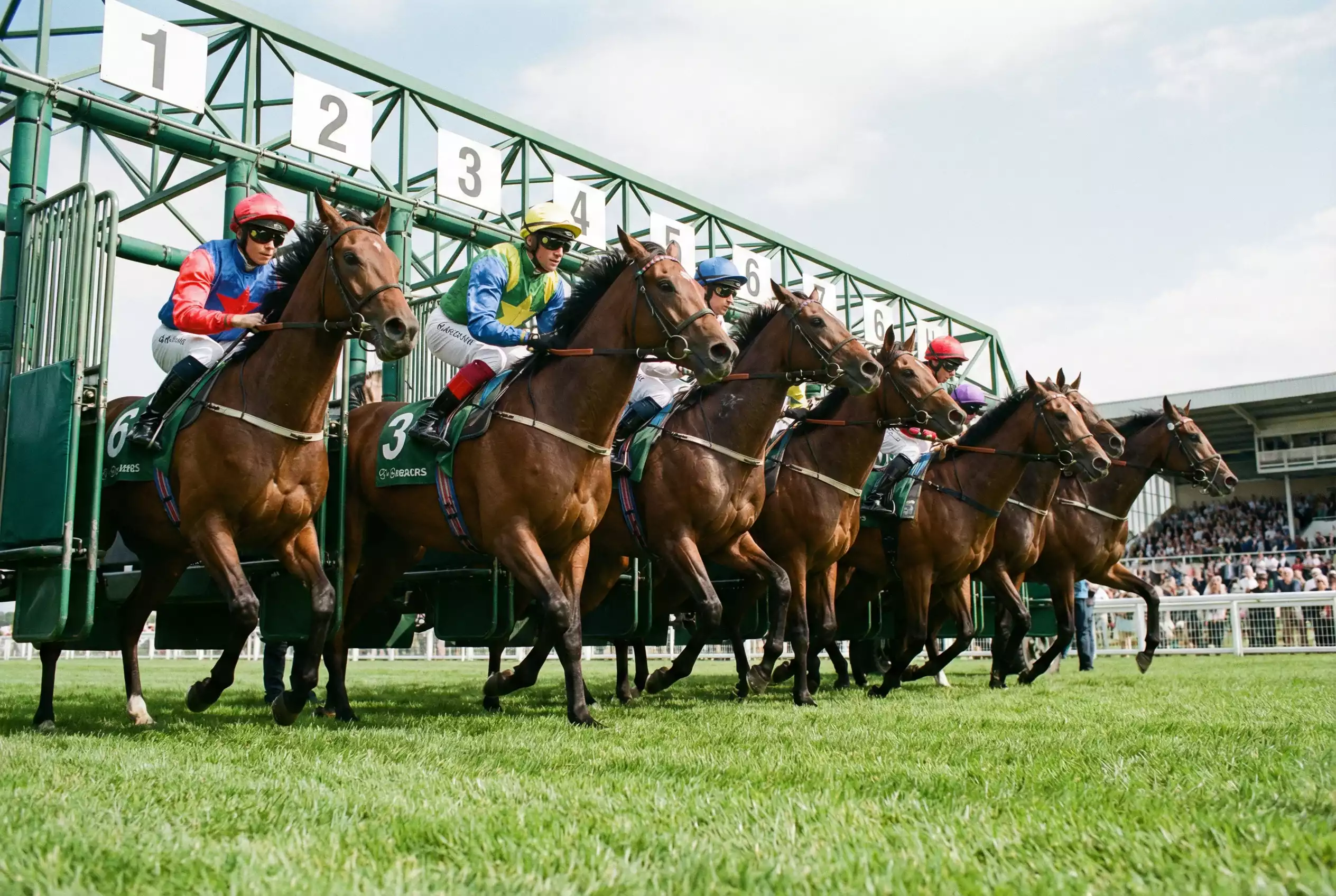
British horse racing operates on an industrial scale that most casual observers underestimate. The BHA's own parliamentary evidence confirms that over 10,000 races are staged annually, with betting markets open 362 days a year. The industry behind those numbers generates more than £1.47 billion in direct revenue and supports roughly 85,000 jobs across the UK. Within that ecosystem, non runners are not a footnote — they are a daily variable that reshapes racecards, recalculates odds, and triggers deductions from your payout before the field has even left the stalls.
If you have ever checked your racecard on the morning of a meeting and found a fancied selection crossed out with "NR" beside it, you already know the sinking feeling. What happens next — to your bet, to the market, and to the remaining runners — is what this guide breaks down in full. From the mechanics of Rule 4 deductions to the going report's role in driving withdrawals, from Non Runner No Bet promotions to the strategic angles that sharp punters exploit before the off, every layer of the non-runner landscape is covered here with the data and context you need to make better decisions on race day.
The Non-Runner Cheat Sheet — What to Check Before the Off
- Non runners account for roughly 5–9% of all declarations in British racing, with rates spiking on 48-hour declaration fixtures and during wet winter months when soft or heavy ground dominates.
- Rule 4 deductions range from 90p in the pound for short-priced withdrawals down to zero for horses over 14/1 — the favourite's price at the time of withdrawal determines the hit to your payout.
- Standard bets are refunded if your horse is a non runner, but ante-post bets are not — Non Runner No Bet (NRNB) promotions from bookmakers are the only protection, and they vary by firm and meeting.
- BHA rule changes in 2024 and 2025 now allow stewards to declare a horse a non runner if it is denied a fair start at the stalls or tape, closing a long-standing gap between racing reality and betting outcomes.
- Sharp punters treat withdrawals as market events: going changes, draw shifts, pace recalculations, and exchange inefficiencies all create windows of value that close quickly after a non runner is announced.
What a Non Runner Actually Means — And Why the Label Matters
A non runner is any horse that has been declared for a race but is subsequently withdrawn before the contest takes place. The "NR" tag on a racecard is more than administrative shorthand — it carries specific consequences for every bet placed on that horse and, depending on the circumstances, for every other bet in the same race. The distinction between a horse that is a non runner and one that ran but failed to finish (pulled up, fell, refused) is fundamental: a non runner was never under starter's orders, which means the refund and deduction rules operate differently from any in-race incident.
The BHA's analysis of non-runner patterns identified three causes that account for approximately 90% of all withdrawals: veterinary certificates, trainer self-certificates, and going changes. That concentration matters because it tells you where to focus your pre-race checks. A horse withdrawn by vet certificate has been examined and deemed unfit — the trainer had no choice. A self-certified withdrawal is the trainer's own call, made without veterinary involvement, and it is subject to BHA monitoring thresholds that can result in sanctions. A going-related withdrawal means the trainer judged the ground conditions unsuitable for that horse's running style or physical makeup.
Non Runner (NR) — a horse withdrawn before coming under starter's orders. Your stake on a single bet is returned in full (subject to timing). In accumulators, the NR leg is voided and the bet recalculates as if that leg never existed. Ante-post bets are the exception: no refund applies.
Understanding the label also means understanding its timing. A horse can become a non runner at several points: at the declaration stage (24 or 48 hours before the race), on the morning of the race after an inspection, or — under rules introduced in 2024 — even at the start itself if stewards determine the horse was denied a fair start. Each timing window triggers a slightly different set of consequences for bettors, and the gap between a morning withdrawal and a stalls-time withdrawal can be the difference between getting your stake back cleanly and facing a Rule 4 deduction on your winning bet.
Five Reasons Horses Get Scratched Before a Race
Every non runner has a story, but most of those stories fall into a handful of familiar categories. The challenge for punters is not just knowing what the categories are but understanding how each one signals a different kind of risk — and a different kind of opportunity — for the race that remains.
Veterinary Certificates
The most straightforward reason for withdrawal is also the least contentious. A horse that picks up an injury, develops a temperature, or shows signs of respiratory illness is examined by a vet, who issues a certificate declaring it unfit to race. Under BHA rules, a horse withdrawn by veterinary certificate cannot start in any race for two days following the intended race — a cooling-off period designed to prevent trainers from pulling a horse from one meeting and running it the next day on more favourable terms. Vet-cert withdrawals are highest during the winter Jump season, when horses train and travel in cold, wet conditions that breed infection.

Trainer Self-Certification
This is the category that generates the most friction. A trainer can withdraw a horse by self-certifying that it is not fit to race — without producing veterinary evidence. The BHA permits this because not every issue requires a vet's examination: a horse might have worked poorly on the gallops that morning, or its temperament might have deteriorated in the days leading up to the race. But the system is open to tactical use, and the BHA knows it. Trainers whose self-certification rate exceeds the threshold — 12% on the Flat, 9% over Jumps — lose the right to self-certify for twelve months. That sanction is automatic for trainers with 100 or more declarations; for smaller yards, the BHA retains discretion.
Going Changes
Ground conditions are the single biggest environmental driver of non runners. When overnight rain turns good-to-soft going into heavy, trainers with horses that need faster ground face an obvious decision. The data makes the scale of this effect clear: according to BHA's Racing Report, 78% of Jump fixtures in the first quarter of 2024 ran on soft or heavy ground, compared to a three-year average of 48%. That kind of sustained soft-ground winter pushed non-runner rates upward across the entire Jump programme and contributed to a measurable decline in field sizes at premium meetings.
Transport and Logistics
Horses travel to racecourses by horsebox, and anything that disrupts that journey — mechanical failure, motorway closures, a horse that loads badly or injures itself in transit — can result in a late withdrawal. These are relatively uncommon compared to vet certs and going changes, but they tend to come late in the day, leaving punters with less time to react and less clarity about whether a Rule 4 deduction will follow.
Stalls Refusal and Bolting
The final category is the one that has changed most recently. A horse that refuses to enter the starting stalls, or bolts before the start, traditionally still counted as a runner for betting purposes — meaning your money was gone even though the horse never raced. BHA rule changes in 2024 and 2025 altered this picture significantly, granting stewards the power to declare such horses non runners. This scenario is covered in detail later in this guide.
"Non-runners are a source of frustration to those who watch and bet on the sport, creating uncertainty in betting markets, reducing participation, the number of runners, and the competitiveness of races" — Richard Wayman, Chief Operating Officer, BHA.
The frustration Wayman describes is compounded by trends in the horse population itself. The BHA's full-year report for 2024 showed that the number of high-quality Jump horses rated 130 or above fell from 787 to 716 — a 9% decline continuing a trend that stretches back to the 2020/21 season. Fewer top-level horses means smaller fields in the races that matter most, and each non runner from that shrinking pool of quality animals hits the competitive balance harder than it would in a deeper market.
From Declaration to Withdrawal — The Race-Day Timeline
The path from a horse being entered for a race to the "NR" tag appearing on your racecard involves multiple stages, each governed by its own rules and deadlines. Understanding this timeline is not academic — it tells you when to expect withdrawals, how much warning you will get, and whether the deduction machinery has time to activate before the off.
The Declaration Window
Horses are declared to run either 24 or 48 hours before race time, depending on the type of fixture. Standard midweek meetings use a 24-hour window; weekend and selected high-profile fixtures use a 48-hour window. The 48-hour system was introduced to serve the international betting market — overseas operators need time to compile racecards and open markets — but it comes with a well-documented trade-off. Data from Racing Post showed that the non-runner rate jumped from 6.02% under 24-hour declarations to 9.17% under 48-hour declarations. The logic is straightforward: the further in advance a trainer commits, the more likely conditions — weather, going, or the horse's health — will change between declaration and race day.
Morning of the Race
On race day, trainers submit withdrawals through racingadmin.co.uk, the digital portal operated by Weatherbys on behalf of the BHA. Weatherbys processes the withdrawal, updates the official racecard, and triggers the cascade: bookmakers adjust their markets, Rule 4 deductions are calculated, and NRNB promotions apply. Most morning withdrawals land between 8:00 and 10:00 AM, driven by overnight going reports and early-morning veterinary checks.
Late Withdrawals and At-the-Start Scenarios
Withdrawals can occur right up to the point where horses come under starter's orders. A horse that plays up at the start — refusing to load into stalls or bolting before the field is released — was historically considered to have "run" for betting purposes. The BHA's rule changes, which took effect on 1 May 2024 for Flat races and 1 October 2025 for Jump races, now allow stewards to declare such a horse a non runner if it was denied a fair start. This represents a meaningful shift, bringing British racing into alignment with the model recommended by the International Federation of Horseracing Authorities.
"This amendment to the Rules will enable British racing to become signatories to the International Federation of Horseracing Authorities model rule on non-runners and therefore see us align with other major racing nations" — Brant Dunshea, Chief Regulatory Officer, BHA.
BHA Response and Ongoing Monitoring
The BHA does not treat high non-runner rates passively. After introducing a package of measures in 2017, the authority saw non-runner rates fall by 14% — from around 6.6% of declarations to 5.7% — within the first quarter of implementation, according to Racing Post analysis. Those measures included the self-certification thresholds, the two-day cooling-off period after vet-cert withdrawals, and quarterly publication of trainer-by-trainer NR data. The BHA's trainers non-runners page remains the authoritative source for this data, and sharp punters have learned to factor a trainer's NR history into their pre-race assessments.
The declaration-to-withdrawal timeline is where information advantage lives. Monitor morning declarations, track going updates, and know which fixtures use 48-hour windows — that is where value hides before the off.
Interactive Tool
Declaration Window Gap, and Field Size Change
Calculate the exact gap between 24-hour and 48-hour non-runner rates, and the year-on-year change in average field sizes.
Percentage-Point Gap
-
-
24-Hour Rate
-
48-Hour Rate
-
Relative Increase
-
What this guide gives as two figures without the gap: "the non-runner rate jumped from 6.02% under 24-hour declarations to 9.17% under 48-hour declarations." The gap is never calculated — it's +3.15 percentage points, meaning 48-hour fixtures see non-runners at a rate 52.3% higher.
Percentage Change
-
-
2023 Average
-
2024 Average
-
Absolute Change
-
What this guide gives as two years without the change rate: "average field sizes on Flat Premier racedays at 10.86 runners (up from 10.50 in 2023), while Jump Premier racedays averaged just 9.22 (down from 9.69)." Neither percentage change is calculated — Flat rose +3.43%, Jump fell -4.85%.
How a Non Runner Changes Your Bet — Singles, Accas and Ante-Post
The moment a horse is declared a non runner, the consequences for your bet depend entirely on the type of wager you placed and when you placed it. There is no single rule — the treatment varies by bet type, by market, and by timing. Getting this wrong costs money; getting it right at least limits the damage.
Singles and Each-Way Bets
If you backed a non runner as a single bet at standard (non-ante-post) prices, your stake is returned in full. The bet is voided. This applies whether you took an early price or were on the starting price — as long as the bet was placed after final declarations and the horse was subsequently withdrawn. Each-way bets follow the same principle: both the win and place portions are voided and your full stake comes back.
The complication arises when your winning horse is in the same race as the non runner. In that scenario, your bet stands — but the payout is subject to a Rule 4 deduction, which reduces your winnings by an amount proportional to the withdrawn horse's price. A short-priced non runner triggers a larger deduction; a longer-priced one triggers a smaller deduction or none at all. The mechanics of Rule 4 are covered in full in the next section.
Accumulators and Multiple Bets
In an accumulator, a non runner turns the affected leg into a void. Your four-fold becomes a treble; your five-fold becomes a four-fold. The remaining legs stand, and if they all win, you are paid at the recalculated accumulator odds. The catch is that if another leg in the same accumulator also has a Rule 4 deduction applied — because there was a non runner in that race too — your payout shrinks from two directions at once: a reduced number of legs and a reduced return on one or more of the surviving legs.
Ante-Post Bets
Ante-post is the exception that catches newcomers. If you placed a bet before the final declaration stage — typically more than 48 hours before the race — your money is gone if the horse becomes a non runner. No refund. This is the fundamental trade-off: you accept the risk of losing your stake to a withdrawal in exchange for bigger prices. For major festivals like Cheltenham and the Grand National, where ante-post markets open months in advance, this risk is not theoretical — it is a near-certainty that some fancied horses will not make the final field.
Exchange Markets
On betting exchanges like Betfair and Smarkets, a non runner triggers different mechanics. The horse's market is voided and stakes returned to both backers and layers. For the remaining runners, a reduction factor — not a Rule 4 deduction — is applied to winning bets. The reduction factor is calculated from the non runner's traded price, and if that implied probability is below 2.5%, no reduction is applied at all. This threshold means that long-priced non runners on the exchange often have zero impact on your payout.
The BHA's 2024 report recorded an overall decline in betting turnover on British racing of roughly 6.8% year-on-year, with a steeper 16.5% fall over two years. Non runners contribute to that decline — every void bet generates no revenue for bookmaker or sport. For punters, the takeaway is simpler: know the rules for your bet type, and check whether NRNB protection is available.
Singles get refunded, accas lose a leg, ante-post bets lose everything, and exchange bets face a reduction factor rather than Rule 4. The type of bet you place determines your exposure to non-runner risk — and your choice of protection strategy.
Rule 4 Deductions — The Full Scale and How It Hits Your Payout
Rule 4 is the mechanism that adjusts payouts when a horse is withdrawn after betting has opened. Named after Tattersalls Rule 4(c), it exists because removing a runner changes the probabilities — the remaining horses are collectively more likely to win — and without adjustment, bookmakers would overpay relative to the true odds.
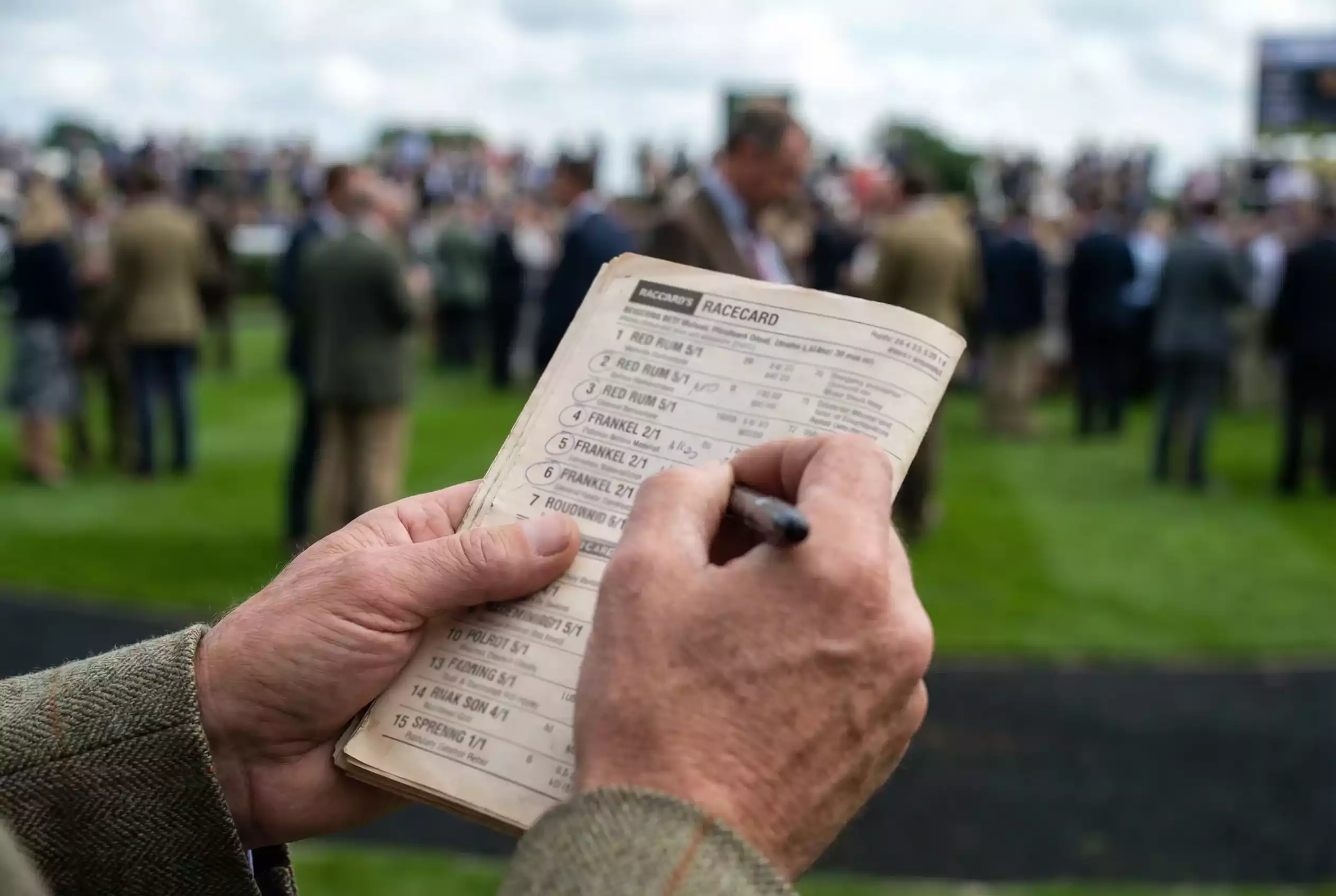
The deduction is expressed as pence in the pound, applied to your net winnings (not your stake). The scale is tied to the odds of the withdrawn horse at the time of withdrawal. A short-priced favourite triggers the maximum deduction of 90p in the pound, while a horse at 10/1 to 14/1 triggers just 5p, and any withdrawal at odds longer than 14/1 carries no deduction at all.
The full table runs from 90p at the top to zero at the bottom. The steps are not evenly spaced: the jump from a 10p deduction to a 15p deduction covers a smaller odds gap than the lower end of the scale, reflecting the sharper increase in probability redistribution as you move toward shorter prices.
Cumulative Rule 4
When more than one horse is withdrawn from the same race, the deductions are added together — but the combined total is capped at 90p in the pound. So if two non runners carry deductions of 45p and 30p respectively, the applied deduction is 75p, not some compounded figure. If the sum exceeds 90p, you pay only 90p. This cap prevents a situation where multiple withdrawals would leave a punter with an adjusted payout close to zero, though a 90p deduction still leaves you with just 10% of your net winnings.
The 5p Exception
Several major bookmakers — bet365, Coral, Ladbrokes, and William Hill among them — do not apply the 5p Rule 4 deduction when only one horse is withdrawn at odds in the 10/1 to 14/1 range. This is a customer goodwill gesture rather than a regulatory requirement, and it applies only when there is a single non runner triggering a 5p deduction. If two horses are withdrawn and both carry a 5p deduction, the combined 10p deduction is applied normally. It is a small concession, but over a season of betting, it adds up — and it is worth knowing which firms extend it.
Rule 4 deductions range from 90p (odds-on favourite withdrawn) to zero (14/1 or longer). Multiple withdrawals are additive up to a 90p cap. Several leading bookmakers waive the 5p deduction for a single long-priced withdrawal — check your firm's policy.
Rule 4 Deduction Table
The full Tattersalls Rule 4(c) scale works from the top down. At the heaviest end, a horse withdrawn at 1/9 or shorter costs you 90p in the pound — effectively wiping out most of your net winnings. Move through the odds-on range and the deduction drops in roughly 5p steps: 80p at 1/4 to 2/9, 70p at 1/3 to 4/11, 60p at 1/2 to 4/7, 50p at 5/6 to 4/5. At evens the deduction sits at 40p, meaning you lose nearly half your profit to an even-money withdrawal.
Beyond evens the descent continues: 35p at 5/4 to 6/4, 30p at 13/8 to 7/4, 25p at 15/8 to 9/4, 20p at 5/2 to 3/1, and 15p at 10/3 to 4/1. Once you reach the 9/2 to 6/1 band the deduction is 10p, and from 13/2 to 14/1 it drops to just 5p. Anything longer than 14/1 carries no deduction at all — the horse was too far out of the market for its removal to materially shift the remaining probabilities.
The practical point is the escalation at the short end. The gap between a 40p deduction (evens) and a 90p deduction (1/9 or shorter) covers a narrow range of prices that belong almost exclusively to strong market leaders. If the favourite is withdrawn from a Cheltenham Grade 1 where it was trading at 4/6, that is a 55p deduction — more than half your net winnings on any other runner in the field. Before the off, checking the favourite's current odds against this scale gives you a clear sense of the potential damage if that horse does not run.
Example: Your horse wins at 5/1 with a £10 stake. A non runner was withdrawn at 3/1 (20p deduction).
Gross winnings: £10 x 5 = £50.
Rule 4 deduction: £50 x 0.20 = £10.
Adjusted winnings: £50 - £10 = £40.
Total return: £40 + £10 stake = £50 (instead of £60).
Non Runner No Bet — Which Bookmakers Give Your Stake Back
Non Runner No Bet — usually shortened to NRNB — is a promotional offer that removes the biggest pain point in ante-post betting: the risk of losing your stake if your horse does not make the final field. Under standard ante-post rules, a non runner means your money is gone. Under NRNB terms, your stake is returned as cash (not a free bet) if the horse you backed is subsequently withdrawn. The distinction between cash refund and free-bet credit matters — cash goes straight back to your balance; a free bet requires you to place another wager and only returns the winnings, not the stake.
NRNB offers are not universal. They are typically activated for specific high-profile festivals and meetings — Cheltenham, the Grand National, Royal Ascot, and occasionally other Premier Racedays. The trigger varies by bookmaker: some extend NRNB automatically on all ante-post bets for qualifying meetings; others require you to opt in or restrict the offer to specific races within the meeting. The qualifying conditions are buried in the terms, and the differences between firms are significant enough to warrant checking before you commit.
Why NRNB Matters Most at Cheltenham
Cheltenham Festival is the peak of the ante-post market and, not coincidentally, the peak of non-runner risk. The 2024 Festival illustrated this in painful terms: trainer Nicky Henderson withdrew seven horses due to illness — including high-profile entries like Shishkin and Constitution Hill — sacrificing an estimated £1.3 million in potential prize money. For punters who had backed those horses ante-post without NRNB protection, the losses were total. For those who had sought out NRNB terms, the stake came back and could be redeployed elsewhere during the festival.
The Cheltenham 2025 Festival carried a total prize fund of £4.93 million. At that level of competition, the commercial incentive for bookmakers to offer NRNB is clear: it attracts ante-post volume in the weeks before the meeting, when betting activity would otherwise be suppressed by non-runner fear.

NRNB Terms to Watch
Common restrictions include: NRNB may apply only to win singles (not each-way); it may cover only the first bet on a qualifying race; it may not apply after a specified cut-off date; and it almost always excludes exchange bets. Some firms cap the eligible stake, and a few restrict the offer to new customers. Reading the terms is not optional — it is the difference between a safety net and a false sense of security.
NRNB transforms ante-post risk by returning your stake as cash if the horse does not run. It is most valuable at festivals like Cheltenham and the Grand National, but qualifying conditions vary by bookmaker — always check the terms before the off.
Going Report and Non Runners — Reading the Ground Before You Bet
The going report is the single most predictive tool for anticipating non runners. Every racecard carries a going description — firm, good to firm, good, good to soft, soft, heavy, and various stages in between — and that description shapes which trainers will let their horses take their chance and which will withdraw. Learning to read the going report not as background colour but as an active signal is one of the most practical skills a punter can develop before the off.
How Going Drives Non Runners
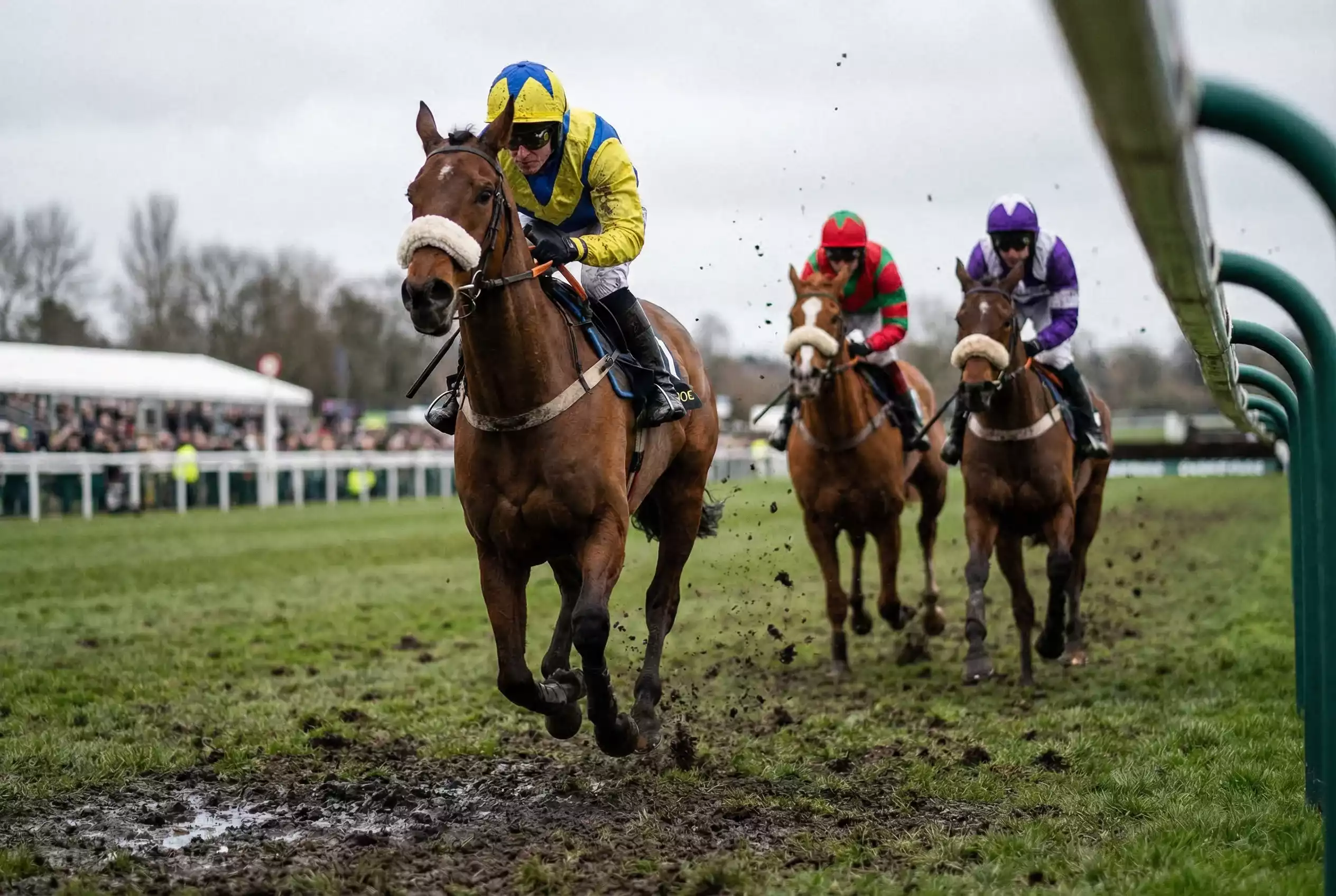
The connection between ground conditions and withdrawals is direct. When the going turns soft or heavy, horses with a preference for faster ground become candidates for withdrawal. The data from the 2024 Jump season makes the scale vivid: according to the BHA's Racing Report, 78% of Jump fixtures in Q1 2024 ran on soft or heavy ground, against a three-year average of just 48%. That is a season-defining tilt that reshaped fields across the entire winter programme.
Field Sizes and Going
The downstream effect shows up in field-size data. The BHA's full-year report for 2024 recorded average field sizes on Flat Premier racedays at 10.86 runners (up from 10.50 in 2023), while Jump Premier racedays averaged just 9.22 (down from 9.69). The Flat season, running through drier summer months, benefited from fewer withdrawals. The Jump season, battered by a historically wet winter, saw fields shrink as trainers protected their horses from punishing ground.
For punters, field-size changes after going-driven withdrawals are not just a statistic — they reshape the race. A competitive 12-runner handicap that loses three runners to soft ground becomes a 9-runner affair with a different pace profile, different draw dynamics, and a different favourite. The going report is your first indicator of whether that kind of field reduction is coming.
Checking the Going Before You Bet
The clerk of the course publishes an official going report the evening before each meeting and updates it on the morning of racing after a course inspection. These updates appear on the racecourse's website, BHA channels, and major racecard providers. The morning update is the one that matters most — it reflects overnight rainfall and the physical inspection result and is the basis on which trainers make their final calls. If the going changes between the morning report and race time, further withdrawals can follow, and these late changes are where the market can be slow to adjust.
Going reports are the best early-warning system for non runners. Track the overnight and morning updates, compare them with your selections' ground preferences, and be ready to reassess. Wet winters produce more non runners, smaller fields, and bigger adjustments to your racecard.
When a Horse Bolts or Refuses Stalls — The New BHA Rules
For years, one of the most frustrating scenarios in racing was this: you back a horse, it refuses to load into the starting stalls or bolts before the start, the race goes off without it — and your bet counts as a loser. The horse never raced, but because it was technically under starter's orders, your stake was gone.
The BHA addressed this with two rule changes that together close the gap between the racing reality and the betting outcome.
The May 2024 Rule Change — Flat Racing
From 1 May 2024, stewards gained the authority to declare a horse a non runner in Flat races started from stalls if the horse was denied a fair start. Previously, the only grounds were mechanical failure of the gates or a jockey being unseated. The new rule covers horses that refused to load, broke out before the gates opened, or were otherwise prevented from a fair start.
The October 2025 Extension — Jump Racing
On 1 October 2025, the BHA extended the same principle to Jump racing and all races started from a tape. This was a logical expansion: if stewards can protect bettors in Flat races at stalls, the same should apply at the tape in hurdles and chases.
"While we don't expect this Rule to be required very often, we hope that extending the Stewards' power in this area is a positive development for participants and bettors" — Brant Dunshea, Chief Regulatory Officer, BHA.
Together, these two changes mean that British racing now has a consistent framework across both codes. If a horse is denied a fair start — regardless of whether the race uses stalls or a tape — stewards can declare it a non runner, triggering voided bets and (where applicable) Rule 4 deductions on the remaining field. For punters, this is a meaningful improvement: it means the outcome of your bet is more closely aligned with whether the horse actually raced, rather than with a technicality about when it came under starter's orders.
Note: The stewards' decision is final and applies only when the horse was genuinely denied a fair start. A horse that loads normally, breaks cleanly, and then veers off course during the race is still a runner for betting purposes. The rule covers pre-start scenarios only.
Turning Non Runners Into an Edge — Five Strategic Angles
Most punters treat non runners as an annoyance — something that happens to their racecard, not something they can use. But a withdrawal does not just remove a horse; it redistributes probability across the remaining field, and that redistribution is not always efficient. The market adjusts, but it does not always adjust correctly or instantly. That gap between the new reality and the market's response is where the edge lives.
Angle 1: The Favourite Withdrawal
When a favourite is withdrawn, the second favourite typically shortens — but not always by enough. The market's initial reaction tends to overcorrect on the immediate next-in-market horse while underpricing others further down. If you have identified a selection at 8/1 whose main threat was the favourite, that horse's true chance may now be closer to 5/1 — but the market might only have moved it to 7/1. Acting quickly is the smart move, and it requires being plugged into NR alerts rather than discovering the withdrawal at post time.
Angle 2: Field-Size Exploitation
The BHA's 2024 Fixture List analysis documented that the average turnover per race fell by approximately 8% compared to the previous year — and by 19% relative to 2021/22. Smaller fields generate less market liquidity, which means prices can shift more sharply in response to non runners. In a 14-runner handicap that drops to 10 runners, the overround shrinks, the each-way terms become relatively more generous, and horses drawn wide may find themselves closer to the rail. Each effect is small on its own, but combined they shift the value landscape meaningfully.
Angle 3: Going-Related Withdrawals as a Selection Filter
When a non runner is withdrawn specifically because of a going change, the remaining field consists entirely of horses whose connections believe they can handle the current ground. This is an implicit endorsement — if a trainer lets the horse take its chance on soft ground, the trainer is telling you that horse can act on soft. Conversely, if the withdrawn horse was the only confirmed front-runner in the field, the pace dynamics change entirely, and hold-up horses gain an advantage they did not have when the race was carded.
Angle 4: Exchange Opportunities
On the exchange, a non runner creates a brief window of inefficiency. The voided market returns stakes to backers and layers, and both sides may reinvest elsewhere in the same race — but not always rationally. Betfair's reduction factor means short-priced non runners are factored into surviving bets, but the market movement immediately after the NR announcement often overshoots. If you are set up to trade, that overshoot is tradeable.

Angle 5: Acca Rebalancing
A non runner in an accumulator is usually treated as a void leg, but the psychological response for most punters is relief rather than reassessment. The smart move is to reassess: the race that lost a runner may now have a different favourite, and adding a new leg to replace the void can rebuild the acca at better value. This requires discipline and speed, but it is a repeatable edge for punters who monitor non runners systematically.
Non runners are not just setbacks — they are market events that create temporary mispricings. Speed, preparation, and a systematic approach to reassessing the remaining field are what separate punters who lose money to withdrawals from those who find money in them.
Draw Shifts and Pace Changes After a Withdrawal
A non runner does not just remove a horse from the field — it physically removes a body from a position on the track. In Flat racing, where the draw (the stall position assigned by ballot) can be a decisive factor, the withdrawal of a horse changes the spatial arrangement of the remaining field. In Jump racing, where pace rather than position matters more, the removal of a front-runner or a confirmed hold-up horse alters the race's tactical shape. Both effects are undertreated by most punters and undertreated by most racecard apps.
Draw Implications
When a horse is withdrawn, stall numbers are not reassigned. The gap is left empty, and the remaining horses run from their originally drawn positions. On a straight course — at Ascot, Newmarket, or York — this matters because draw bias is well-documented and often decisive. If stall 2 becomes vacant, the horse in stall 1 now has more room on the inside rail but also an open gap to its right.
The more significant effect arises when multiple non runners cluster on one side of the draw. If stalls 1, 3, and 5 are all vacant in a 16-runner sprint, the low-draw group has been hollowed out, and the high-draw horses now find themselves in a more compact, centralised group. Rail movements add another layer: if the rail has been moved out, the low draw loses further value, and non runners from low stalls amplify that shift.
Pace Implications
Pace analysis is less precise than draw analysis — it relies on interpreting running styles from form — but the withdrawal of a known pace-setter can reshape a race thoroughly. If the only confirmed front-runner in a 10-runner chase is withdrawn, the remaining field may lack a pace-maker, leading to a slowly run race that favours hold-up horses with a finishing kick. Conversely, if a hold-up specialist drops out, the front-runner faces less pressure from behind.
Field-size data from the BHA shows that Jump Premier racedays averaged 9.22 runners in 2024, down from 9.69 the year before. In fields that small, the removal of even one horse with a defined role can tip the race dynamic entirely, making pace analysis after a non runner essential rather than optional.
Comparing Bookmaker Policies on Non Runners
Not all bookmakers handle non runners identically, and the differences — while they might look minor in the terms and conditions — can add up across a season's worth of betting. The areas where policies diverge include Rule 4 application, NRNB availability, accumulator void-leg treatment, and the speed at which markets are updated after a withdrawal.
The UK betting market that processes these policies is substantial. The Gambling Commission's Annual Report 2023-24 confirms the scale of the regulated gambling industry in Britain. Online horse racing betting generates hundreds of millions in gross gaming yield annually — making racing the second-largest segment behind football. That scale means even small policy differences across bookmakers affect a large volume of bets.
Rule 4 Application
All licensed UK bookmakers apply Rule 4 deductions according to the Tattersalls scale. The only notable exception is the voluntary waiver of the 5p deduction by some firms when a single horse is withdrawn at odds of 10/1 to 14/1. Where firms differ is in the timing of market adjustments: some update prices within seconds of an official NR notification; others take minutes, during which you might place a bet at odds that have not yet absorbed the withdrawal.
NRNB Scope
NRNB offers vary widely. Some firms offer NRNB on all races at major festivals; others restrict it to selected feature races. The refund mechanism also differs: cash back to balance is the standard, but some firms credit it as a free bet. Coverage of each-way ante-post bets under NRNB is another variable: some firms void both win and place portions; others void only the win part.
Accumulator Treatment
The standard treatment of a non runner in an accumulator — voiding the leg and recalculating — is consistent across almost all UK bookmakers. The differences show up in edge cases: dead-heat-plus-NR scenarios, multiple non runners in the same acca, and whether insurance promotions interact with void legs. Some firms count a void leg as a non-event for insurance purposes; others treat it as a win for insurance calculation, which can work in your favour if one of your other legs loses.
Bookmaker selection is itself a strategic decision when non runners are a factor. If you are primarily an ante-post bettor at festivals, prioritise firms with broad NRNB coverage and cash refunds. If you bet mostly on the day, the speed of market updates and the 5p waiver policy matter more. If your style is accumulators, look at the void-leg treatment and whether insurance terms account for NR scenarios fairly.
Frequently Asked Questions About Non Runners
Do I get my money back if my horse is a non runner?
It depends on when you placed the bet. If you backed the horse at standard (non-ante-post) prices — meaning after final declarations — your stake is returned in full on a single or each-way bet. In an accumulator, the non-runner leg is voided and the bet recalculates with fewer selections: a four-fold becomes a treble, and so on. The important exception is ante-post betting. If you placed your bet before the final declaration stage, the standard rule is all bets stand — no refund. The only protection is a bookmaker offering Non Runner No Bet (NRNB) terms, which returns your stake as cash if the horse is withdrawn. On exchanges like Betfair, matched bets on the non runner are voided and stakes returned to both backers and layers.
What is a Rule 4 deduction and how is it calculated?
A Rule 4 deduction is a reduction applied to your winnings when a horse is withdrawn from a race after the betting market has formed. It adjusts for the changed probabilities: the remaining horses are collectively more likely to win. The amount depends on the odds of the withdrawn horse at the time of withdrawal. A short-priced favourite triggers a larger deduction (up to 90p in the pound at 1/9 or shorter), while a longer-priced horse triggers a smaller one (5p at 10/1 to 14/1) or none at all (over 14/1). The deduction is taken from your net winnings, not your stake. If multiple horses are withdrawn, the individual deductions are added together but capped at 90p in the pound. Some major bookmakers waive the 5p deduction when only a single horse is withdrawn at odds of 10/1 to 14/1.
What is Non Runner No Bet and which bookmakers offer it?
Non Runner No Bet (NRNB) is a promotional offer that refunds your ante-post stake in cash if the horse you backed does not run. Under normal ante-post rules, all bets stand regardless of withdrawals. NRNB removes that risk. Most major UK bookmakers offer NRNB on selected high-profile meetings, particularly Cheltenham Festival, the Grand National, and Royal Ascot. The scope varies: some firms cover all races at a qualifying meeting, while others restrict it to feature races. The refund is usually cash back to your balance, though some firms may issue a free bet instead. NRNB typically applies to win singles only and may exclude each-way bets or bets placed after a cut-off date. Always check the full terms for your bookmaker and meeting.
