

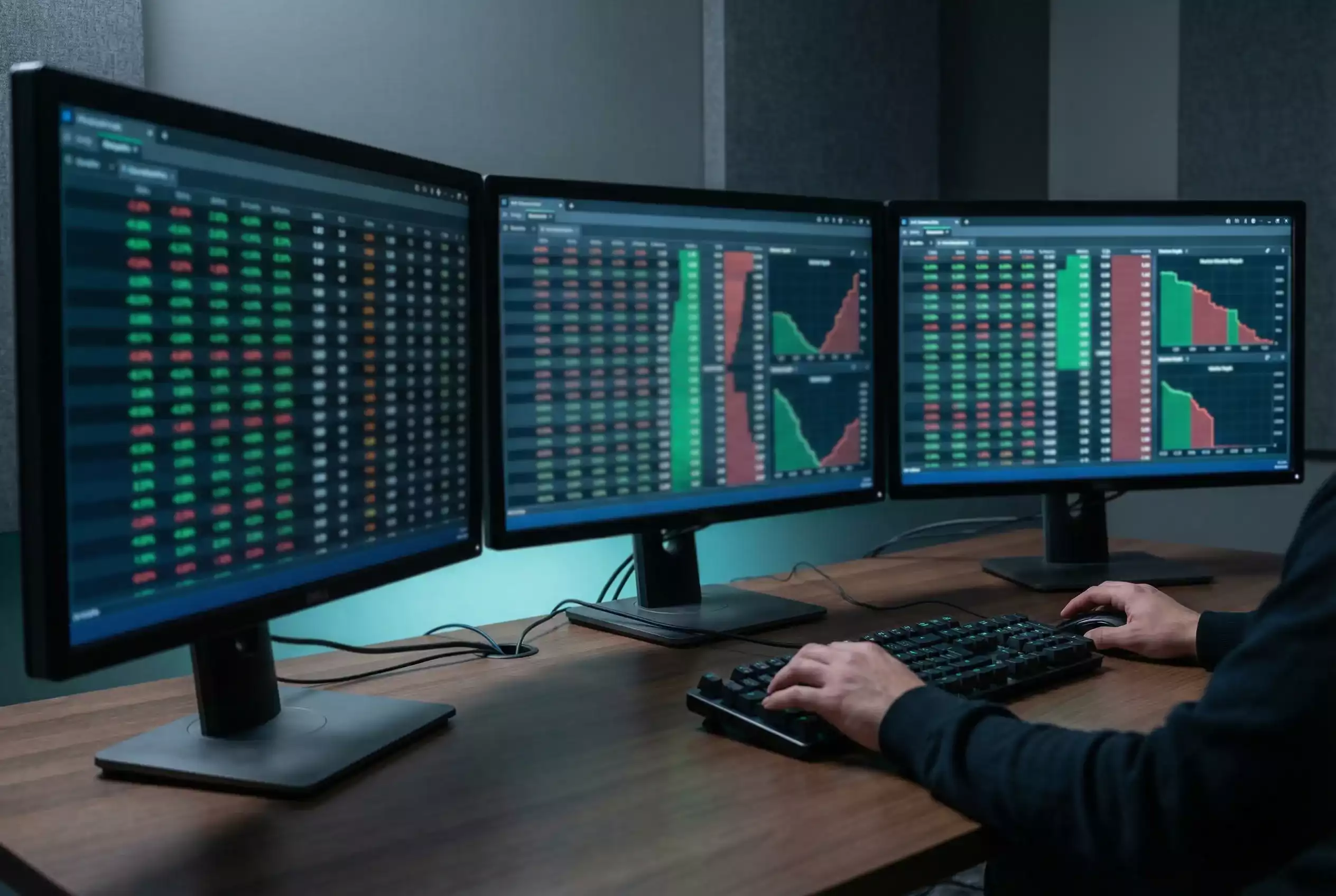
Five minutes faster. That is the gap between seeing a non runner on the exchange and seeing it on the racecard. Between the price moving on Betfair and the bookmaker updating their odds. Between the market repricing and the casual punter checking their phone. Five minutes is not a long time, but in a market that adjusts within ten, it is half the window — and it is enough to act on.
Live NR tracking is the practice of monitoring non-runner declarations in real time, through the fastest available channels, and using that information to identify value before the market settles. It is not about predicting NRs — that is weather analysis and trainer profiling. It is about seeing them first and knowing what they mean for the remaining field, the odds, and your position.
Where NR Data Appears First — Official Channels and Lag Times
The information chain for a non runner starts with Weatherbys, where the trainer files the withdrawal. From there, the data flows to the BHA, to the racecard providers, to the bookmakers, and finally to the punter’s screen. Each step introduces lag, and the lag times vary.
The scale of the NR flow is significant. Historical data shows that non-runner rates increase substantially under 48-hour declaration rules compared to shorter windows — with Sunday racing, which has always required 48-hour declarations, showing notably higher NR rates than midweek fixtures. On a Saturday with 60 declared runners across a single meeting, this translates to multiple non runners — each one a data point that flows through the system at different speeds depending on the channel.
The fastest reflection of an NR is typically the exchange market. On Betfair, the withdrawn horse’s price disappears and the remaining runners begin to reprice within seconds of the NR being confirmed in the Weatherbys system. This is not because Betfair has privileged access to the data — it is because exchange traders who monitor the administrative feeds react immediately, and their trades move the market before the racecard formally updates.
The Racing Post racecard updates within minutes — usually three to five — of the Weatherbys confirmation. Bookmaker racecards (bet365, William Hill, Paddy Power) follow shortly after, typically within five to ten minutes. Social media — Twitter/X accounts of racing journalists and course correspondents — often sits between the exchange and the formal sources, providing informal confirmation before the racecard catches up.
The lag between the exchange and the racecard is the window. A punter watching the Betfair market who notices a horse’s price vanishing can infer the NR and begin assessing the impact on the remaining field before the Racing Post confirms it. Five minutes faster is not a slogan — it is the measured gap between the exchange signal and the racecard update.
Odds Tracking Tools That Reflect Non Runners Instantly
Odds comparison and tracking tools aggregate prices from multiple bookmakers and the exchanges, and the best of them update in near-real-time when an NR triggers market movement.
Oddschecker is the most widely used odds comparison platform in the UK. It displays prices from all major bookmakers alongside the Betfair exchange, and when an NR is declared, the affected bookmaker columns update as each operator reprices. Watching Oddschecker in the minutes after an NR gives you a visual map of how the market is adjusting — which bookmakers have repriced, which are lagging, and where temporary discrepancies exist.
Betfair’s own odds graph — available on the exchange market page — shows the price history for each runner. When an NR is declared, the remaining runners’ graphs show an inflection point: a sudden shortening as the market absorbs the withdrawn horse’s probability. The steepness and speed of that inflection tell you how significant the market considers the NR. A sharp, fast shortening indicates a meaningful withdrawal. A gradual drift indicates an outsider whose removal the market considers immaterial.
On Betfair specifically, the reduction factor threshold is a data point worth monitoring. Under exchange rules, if the reduction factor for a withdrawn horse is less than 2.5%, it is not applied — the horse is deemed too insignificant to affect the market. Tracking which NRs clear this threshold and which fall below it tells you, objectively, how much the withdrawal matters to the exchange settlement.
Data Feeds and APIs — For Punters Who Want Raw Information
For the technically inclined punter, raw data feeds provide NR information in a structured, machine-readable format that can be integrated into spreadsheets, databases, or automated monitoring tools.
The Betfair API is the most accessible option. It provides real-time market data for every exchange market, including runner status (active, removed, winner). When a horse is withdrawn, the API reflects the change immediately, and a script monitoring the API can trigger an alert — a desktop notification, a text message, or an entry in a tracking spreadsheet — within seconds of the NR being processed.
Racing data providers — such as the Racing Post’s data services, Sporting Life’s feed, and third-party aggregators — offer structured NR data as part of broader racing data packages. These feeds include the NR declaration, the stated reason, the time of declaration, and the updated field size. The data is typically delivered via API or JSON feed and is designed for integration into websites, apps, or analytical tools.
The barrier to entry for API-based NR tracking is technical. You need to be comfortable with API authentication, data parsing, and either scripting (Python is the most common choice) or a tool like Google Sheets with API connectors. The reward is a monitoring system that runs continuously and alerts you the moment an NR appears in the data stream — eliminating the need to check apps manually and reducing the lag between NR declaration and your awareness of it to near zero.
Racing Twitter/X and Telegram — Where Insiders Break NR News
Social media is the fastest informal NR source, and within social media, racing Twitter/X and Telegram channels are the most relevant for UK punters.
Racing Twitter/X operates as an open intelligence network. Course correspondents — journalists stationed at the racecourse — often tweet NR news before the formal racecard updates. Trainer accounts sometimes announce withdrawals directly. Jockey agents post booking changes that imply NRs before the withdrawal is officially confirmed. The information is unverified until the racecard catches up, but for speed, nothing in the public domain beats a well-curated Twitter/X list of racing insiders.
Telegram channels dedicated to racing tips and information have grown in popularity and some include NR alerts as part of their service. The quality varies enormously — some channels are run by knowledgeable racing professionals, others by affiliate marketers with no real insight — but the best ones provide NR information alongside contextual analysis: what the withdrawal means for the race, which horses benefit, and whether the market has adjusted.
The risk with social media is misinformation. A rumoured NR that turns out to be false can lead to misplaced bets. The discipline required is to treat social media as an early-warning signal, not a confirmed source. Use it to trigger a check on the exchange or the racecard. If the exchange confirms the NR (the horse’s price has disappeared), act on it. If the exchange shows no change, wait for formal confirmation before adjusting your position.
Building a Daily NR Monitoring Routine
A daily NR monitoring routine for serious punters combines multiple sources into a layered system. The goal is to see every NR as close to the moment of declaration as possible, assess its impact quickly, and act before the wider market absorbs the information.
The morning layer: at 7:30am, check the Racing Post racecard for overnight NRs and the updated going reports. This gives you the baseline — the card after the first wave of withdrawals. At 9:30am, check again for morning NRs triggered by going changes or veterinary assessments.
The real-time layer: from 10am onwards, keep the Betfair exchange open on your phone or desktop. The exchange is your fastest NR indicator. A horse’s price disappearing from the market is the first signal. Cross-reference with the Racing Post racecard within two minutes to confirm.
The social layer: follow a curated list of racing journalists, course correspondents, and trainer accounts on Twitter/X. Enable notifications for the accounts most likely to break NR news early. Use this as a supplement to the exchange, not a replacement. Social media gives you context (the reason for the NR, the trainer’s comment, the going update); the exchange gives you confirmation.
The alert layer: configure push notifications on the Racing Post app for races you have bet on or are planning to bet on. Configure bookmaker app notifications for open bets. These passive alerts catch any NR you might have missed during a gap in active monitoring.
The routine takes discipline, not expertise. Five minutes faster is achievable for any punter willing to set up the tools and check them consistently. The edge is not in having access to secret information — all of this data is public. The edge is in seeing it first, understanding it immediately, and acting before the market catches up.
Live Non Runner Tracking — More on this topic at non runners horses today.
See also History of Non Runner Rules.
