

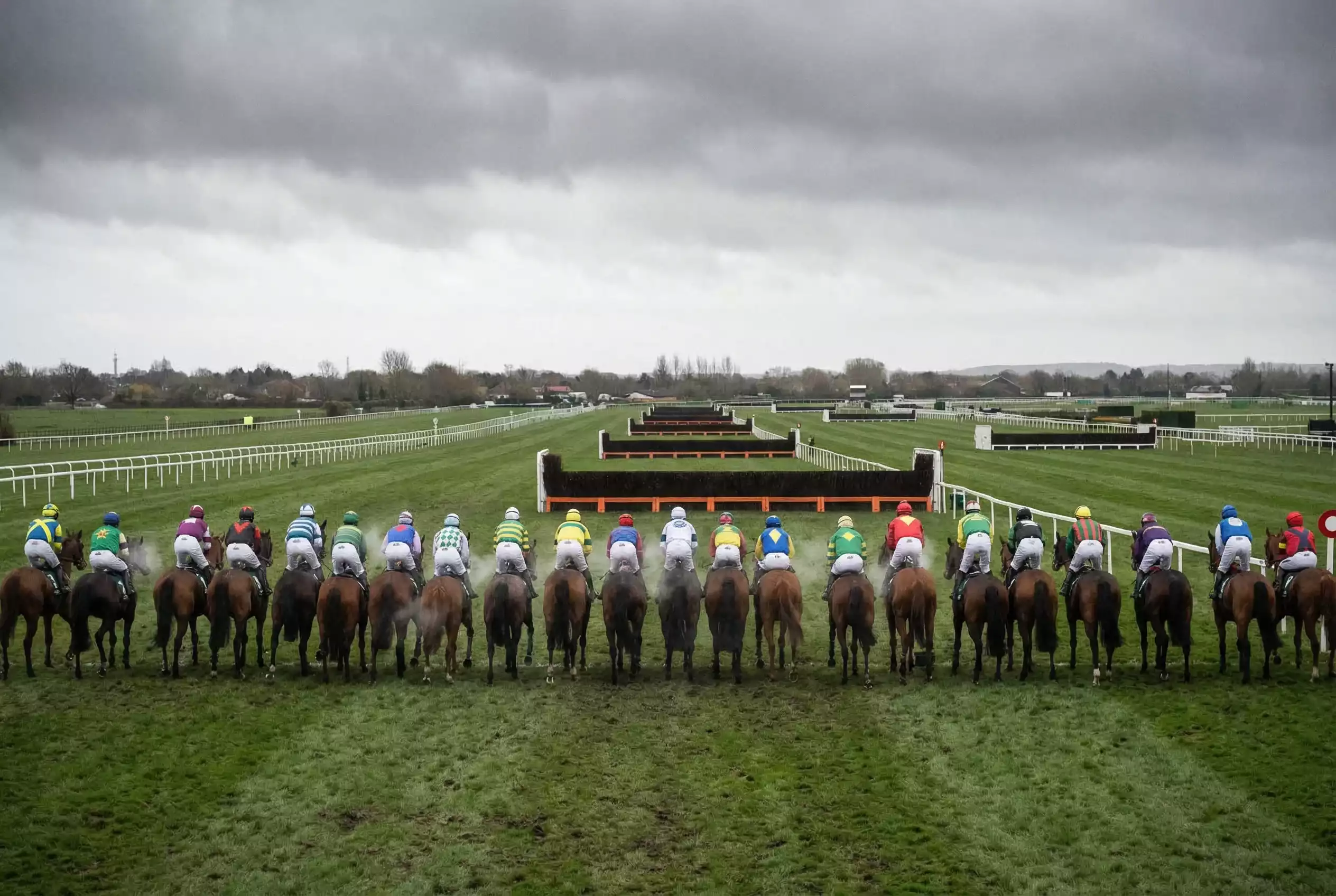
When a horse is withdrawn from a race with a full field, the gap does not always stay empty. The reserve runner system exists to fill it — placing the next horse in line into the field to maintain competitive depth and protect the spectacle. The Grand National’s expansion to six reserves for 2026 is the highest-profile example, but the mechanism operates across British racing wherever fields hit their safety limits and surplus entries exist.
Balloting is the other side of the same coin. When too many horses are entered for the available places, some must be excluded — not because they are unfit, but because the field has a maximum. The ballot removes the lowest-weighted or lowest-rated entries, and for punters who backed those horses ante-post, the ballot is as final as any non runner. Understanding both systems — how reserves enter and how ballots remove — gives you a clearer picture of how fields are assembled and what happens when they change.
The Reserve Runner System — BHA Rules and Race Conditions
The reserve system applies to races where the number of declarations exceeds the maximum field size set by the race conditions or safety limits. The most common example is the Grand National, which has a 34-runner maximum (reduced from 40 in 2024 for safety reasons), but reserves are also used in major handicaps at Ascot, Newmarket, and other premier tracks where competitive fields regularly push against their limits.
The rules are governed by the BHA and the specific conditions of each race. When a race is oversubscribed at the declaration stage, the horses that do not make the final field are ranked as reserves. The ranking is determined by the handicap — the horse with the highest weight among the excluded runners is first reserve, the next-highest is second, and so on. In non-handicap races, the ranking may be determined by rating or, in some cases, by the order of entry.
The number of reserves varies. Some races designate two or three. The Grand National designates six. The figure is set in the race conditions and published alongside the entries. Average field sizes at Jump Premier racedays fell from 9.69 in 2023 to 9.22 in 2024, according to BHA data, which means oversubscription at the premier level is becoming less common — but at the biggest events, where the prize money and prestige attract maximum entries, the reserve system remains essential.
How a Reserve Gets Into the Race — Timing and Procedure
The procedure for a reserve entering the race is triggered by a withdrawal from the main field after the declaration deadline. When a declared runner is removed — for any reason — the highest-ranked reserve is offered the place. The trainer of the reserve horse is contacted by Weatherbys, and the trainer must confirm that the horse will run. If the trainer declines, the next reserve in line is offered the place.
The timing is critical. Reserves can only enter the race up to a specified cut-off, which is set in the race conditions. For most races, the cut-off is the morning of the race or a set number of hours before the off. After the cut-off, a withdrawal from the main field leaves an empty space — no reserve can fill it. The racecard shows the reduced field, and the remaining runners carry the market.
For the reserve trainer, the system creates a period of uncertainty. The horse must be prepared to run — trained, declared, and transported to the racecourse — without any guarantee that it will actually race. If no main-field horse is withdrawn, the reserve goes home without running. The costs of transport, stabling, and preparation are absorbed by the owner. This uncertainty is why some trainers decline the reserve position, particularly for horses that would need to travel long distances to the racecourse.
The administrative process — Weatherbys contacting the reserve trainer, the trainer confirming, the racecard updating — takes time. A late-morning withdrawal from the main field may not be replaced by a reserve until lunchtime, and the market can lag behind the administrative process. Exchange bettors who monitor the racecard closely may see the reserve’s entry before the wider market has repriced.
Balloting — When Too Many Horses Enter and Some Must Go
Balloting is the pre-declaration process that removes horses from an oversubscribed entry list. It is most commonly associated with the Grand National, where over 100 entries are reduced to 40 runners through a series of stages, but it applies to any race where the entries exceed the field limit.
The ballot operates on weight. In a handicap, the lowest-weighted horses — those at the bottom of the handicapper’s assessment — are the most likely to be balloted out. The cut-off line is drawn based on the number of entries and the field limit, and horses below the line are removed. They are not technically non runners — they never made the final declarations — but for ante-post punters, the effect is identical: the horse is not in the race, and the stake is lost.
The ballot is announced at the confirmation stage, well before the declaration deadline. Trainers know the risk when they enter — a horse at the bottom of the handicap is a ballot candidate, and the entry fee is effectively a lottery ticket. Some trainers enter borderline horses hoping that enough higher-rated entries will be withdrawn to bring their horse into the field. Others enter knowing the ballot is likely but wanting the option in case the field thins.
For punters, the ballot is a risk factor that should be priced into any ante-post bet on a horse near the bottom of the weights. The standard advice is clear: if a horse is below the likely ballot line, the probability of it making the field should be factored into your assessment of the ante-post price. A 10/1 shot that has a 30% chance of being balloted out is effectively 14/1 in risk-adjusted terms — and the price needs to reflect that.
Grand National 2026 — Six Reserves and 72-Hour Declarations in Action
The Grand National is the ultimate case study for the reserve and ballot systems. For 2026, the race operates under a 72-hour declaration window with six reserve runners — the most expansive reserve provision in British racing.
The structure works as follows. Initial entries close in January, typically attracting over 100 horses. The field is reduced through the confirmation stages, with the handicapper setting weights and the ballot removing the lowest-rated entries. By the 72-hour declaration deadline — Wednesday before the Saturday race — the field is finalised at 34 runners plus 6 reserves.
As Brant Dunshea, BHA’s Chief Regulatory Officer, noted when discussing the broader at-start rule changes: while the BHA does not expect the new rule to be required very often, extending steward powers in this area is a positive development for participants and bettors. The same philosophy applies to the reserve expansion — it is a mechanism designed for edge cases, but when it activates, it directly affects the field, the market, and the betting public.
The six-reserve provision for 2026 reflects the practical reality that late withdrawals from a 34-horse field are not uncommon. In previous years, four reserves were sometimes insufficient — a cluster of late NRs could exhaust the reserve list and leave the field short of its maximum. Six reserves provide a deeper buffer, increasing the probability that the race starts with a full field of 34.
For punters, the 72-hour window means the Grand National field is confirmed earlier than any other major race — Wednesday rather than Thursday. The reserve movements between Wednesday and Saturday morning are the final adjustments, and monitoring them closely gives you the most up-to-date picture of the field before the world’s most bet-on race.
How Reserves Entering Affect the Betting Market
When a reserve runner enters the field, the market must absorb a new participant. The effect depends on the reserve’s profile — its odds, its form, and whether the market had already priced in the possibility of its entry.
In most cases, a reserve entering a full-field handicap has a modest impact on the wider market. The reserve is typically a lower-rated horse that was on the fringes of the field, and its addition lengthens the overall market slightly without dramatically affecting the prices of the established runners. The overround increases marginally as the bookmaker adds another set of odds.
The exception is when the reserve is a horse with genuine claims. If a well-fancied runner was only excluded because of the ballot — not because of ability — and then enters as a reserve when a higher-weighted horse is withdrawn, the market adjusts significantly. The reserve’s price shortens from its initial long odds, and the remaining runners drift slightly to accommodate the new entrant. In the Grand National, where reserve movements attract media attention and betting volume, this repricing can be visible within minutes.
On the exchange, reserves entering the field create a brief inefficiency. The horse may have been available to back at very long odds — 66/1 or 100/1 — before its entry was confirmed. Once the reserve is in the race, the price contracts. Punters who anticipated the reserve entry and backed the horse at its longest available price capture value that evaporates quickly. This is a niche strategy, but for the Grand National specifically — where reserve movements are closely watched — it is a genuine opportunity for informed bettors who monitor the declaration process in real time.
Reserve Runners and Balloting — More on this topic at non runners horses today.
See also Jockey Changes After Non Runners.
