

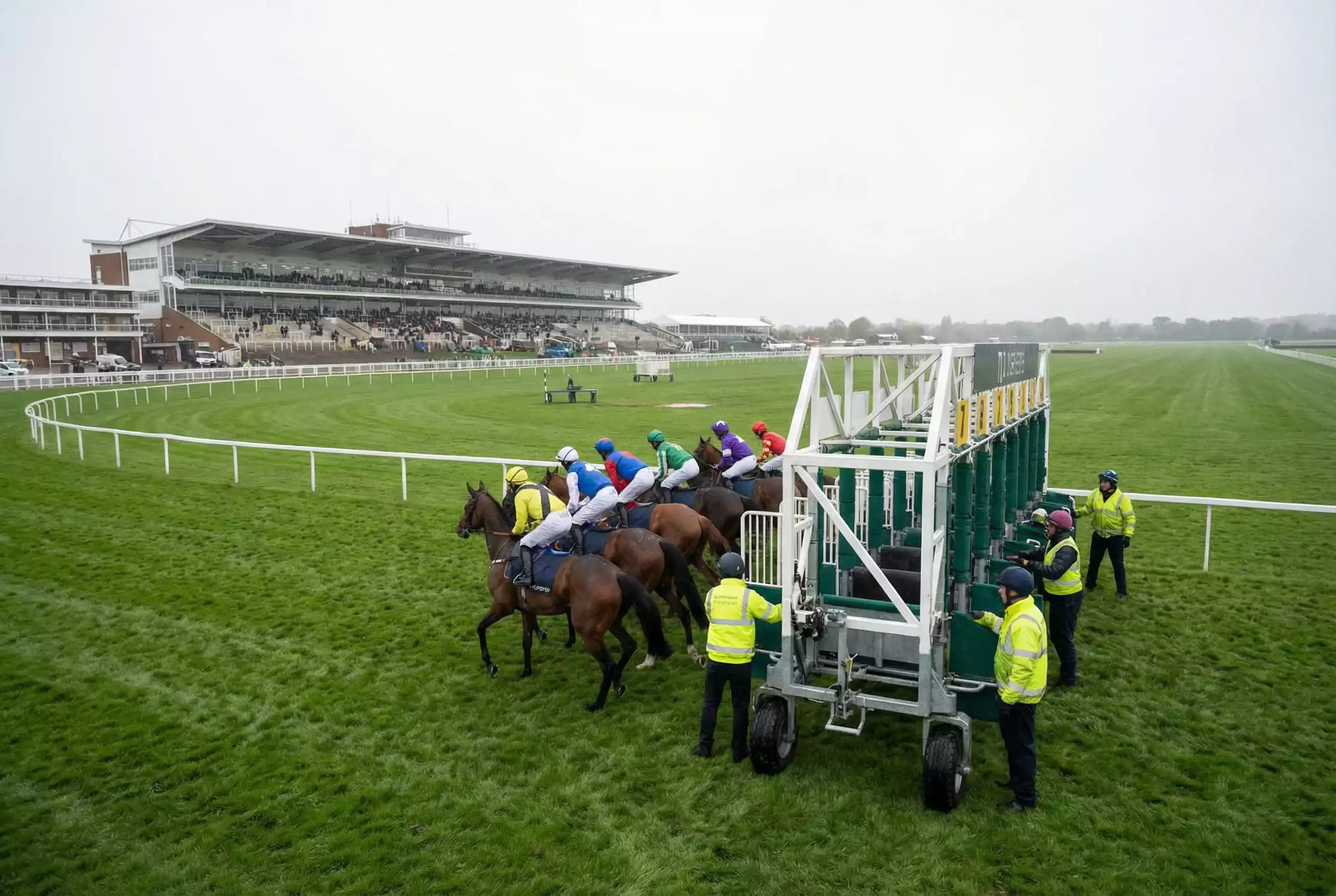
A 12-runner handicap is a different race from a 7-runner handicap. The odds are structured differently, the pace is different, the draw matters more or less, and the favourite’s win rate changes with every horse that leaves the field. Non runners do not just remove a horse from the racecard — they change the nature of the contest. Fewer runners, different race.
This is not an abstract concern. Field sizes in British racing have been under pressure, and non runners compound the problem by shrinking fields that were already smaller than they used to be. For punters, the shift from a full field to a reduced one creates risks and opportunities that the headline odds do not always reflect. Understanding how field size affects the betting landscape is the first step to adjusting for it.
UK Field Size Trends 2023–2024 — The Numbers Behind the Headlines
The data tells a mixed story. According to BHA’s full-year report for 2024, average field sizes at Flat Premier racedays rose from 10.50 to 10.86 — an improvement that reflects the BHA’s strategy of concentrating quality racing on fewer, bigger cards. Flat Core meetings also saw a marginal increase, from 8.89 to 8.93. The Flat side of the sport, in other words, is holding steady or modestly improving at the top level.
The Jump picture is less encouraging. Field sizes at Jump Premier meetings fell from 9.69 in 2023 to 9.22 in 2024. Jump Core meetings rose slightly, from 8.01 to 8.40, but the decline at the premier level is significant because these are the meetings that attract the most betting interest and the most public attention.
The total number of horses that ran at least once in 2024 dropped by 178 — from 18,630 to 18,452 — a 1% decline that was driven almost entirely by a 3% fall in the Jump population. The Flat side actually grew by 0.5%. These headline figures mask considerable variation by meeting type and region, but the overall direction is clear: the horse population is tightening, particularly in Jump racing, and smaller populations produce smaller fields.
Non runners act on top of this baseline. A Jump Premier field that starts at 9.22 and loses two horses to NR on race morning becomes a seven-runner race. That is not a handicap — that is a conditions race by another name, and it should be bet accordingly.
How Non Runners Shrink Fields — Beyond the Obvious
The direct effect of a non runner is the removal of one horse from the field. The indirect effects are less visible but equally important.
A non runner can trigger a cascade. When a fancied horse is withdrawn, the remaining field compresses in the market. Prices shorten, and the overround drops. For some punters, the compressed market no longer offers value, and they withdraw their interest — not formally, but practically. The race receives less betting volume, which in turn affects the starting price formation and the depth of the exchange markets.
On the supply side, a non runner can push a race below the minimum field-size requirement. Most races require a minimum of four or five runners to proceed as a betting event. If a race was marginal before the NR — seven runners where two were doubtful — the withdrawal can bring it close to or below the threshold. In extreme cases, the race may be reclassified or the betting terms altered. Place terms may be reduced or removed entirely, and each-way bettors find their positions weakened without warning.
There is also a perception effect. A race that started with 14 runners and a rich market feels competitive and bet-worthy. The same race with 9 runners after morning withdrawals feels different — more predictable, more top-heavy, less likely to produce a surprise. Whether that perception is justified by the data is debatable, but it shapes how the market prices the remaining runners and how punters allocate their stakes across the day’s card.
Small Fields and Competitive Balance — Does Fewer Runners Mean Less Value?
The relationship between field size and value is nuanced, and the assumption that bigger fields always offer more opportunity does not hold universally.
In large fields — 16 or more runners in a competitive handicap — the market is wide, the form lines are complex, and the possibility of an unconsidered horse running into a place is real. Value tends to exist in the middle and lower reaches of the market, where horses at 10/1 to 25/1 can outperform their odds. The more runners, the more variables, and the more chance that the market has mispriced something.
In small fields — six or seven runners, typically in conditions races or Group events — the form is more transparent. Every runner has been assessed in detail by the market, and the odds tend to reflect the true probabilities more accurately. Value is harder to find because there are fewer places for it to hide. The favourite wins more often in small fields, and the overround is usually tighter, meaning the bookmaker’s margin is smaller but also that there is less room for mispricing.
As Richard Wayman noted when discussing BHA’s strategy for premier racing: the objective was to make the best racing better and use that to grow interest in the sport. Prize money at Premier racedays rose by over £7 million in 2024. That investment is designed to attract bigger, more competitive fields — but when non runners reduce those fields on race morning, the intended quality is diluted. The punter faces a different proposition than the one the programme was designed to deliver.
The value question is not whether small fields are bad for betting — they are simply different. The strategies that work in a 20-runner handicap do not translate to a 6-runner Group 2. Recognising that shift and adjusting your approach is what matters.
Betting Risks in Small Fields — Overround, Favourites and Dead Races
Small fields carry specific risks that punters should account for before committing stakes.
The overround — the bookmaker’s built-in margin — behaves differently in small fields. In a 16-runner handicap, the overround might be 120% or higher, meaning there is a 20% margin built into the prices. In a 5-runner Group race, the overround might drop to 108% or less. The lower margin sounds better for the bettor, but it also means the odds are tighter and there is less scope for individual prices to be wrong. The market is more efficient, and finding an edge is harder.
Favourite strike rates increase in small fields. With fewer runners, the top-rated horse has less competition and fewer things that can go wrong. In statistical terms, the favourite wins approximately 35-40% of small-field races, compared to 25-30% in large-field handicaps. If you are betting against the favourite in a small field, you need a strong reason — not just a preference for bigger odds.
Dead races — contests where one horse is so dominant that the market offers nothing of value — are more common in small fields. A 6-runner race with an odds-on favourite and five 10/1+ outsiders is effectively a match between the favourite and the field. If you do not fancy the favourite, the alternative is to accept odds that are inflated by the lack of credible opposition. These are races where disciplined punters often choose not to bet at all.
How to Adjust Your Approach for Post-NR Field Sizes
When non runners reduce a field, recalibrate before you commit. The adjustment is not complicated, but it requires awareness of what has changed and willingness to alter your plan.
Start by reassessing the favourite. In a reduced field, the favourite’s position is strengthened. If the withdrawn horse was a market rival, the favourite may now be underpriced relative to its true probability. Conversely, if the NR was a pacemaker or a horse that suited the favourite’s running style, the favourite may be weakened in ways the market has not fully captured.
Next, check the place terms. Bookmakers adjust each-way terms when field sizes drop below certain thresholds. A race that offered four places at quarter-the-odds with 16 runners may drop to three places or two after several withdrawals. If you are holding each-way bets, confirm the updated terms. The expected value of your place bet may have changed significantly.
Then consider whether the race is still worth betting on. A race that was a competitive 12-runner handicap in the morning and is now a 7-runner affair after five NRs may no longer offer the complexity and opportunity that attracted you in the first place. Passing the race — moving on to the next one on the card — is a valid decision and sometimes the best one. Not every reduced field deserves your money.
Finally, think about the exchange. Small fields often produce more concentrated exchange markets, with higher liquidity on the top two or three runners. If you prefer to lay rather than back, small fields can offer cleaner lay positions because the favourite’s liability is more predictable. The exchange dynamics shift when the field shrinks, and that shift can create opportunities that the bookmaker market does not.
Field Size and Non Runners — More on this topic at non runners horses today.
See also Ante-Post Bets and Non Runners.
