

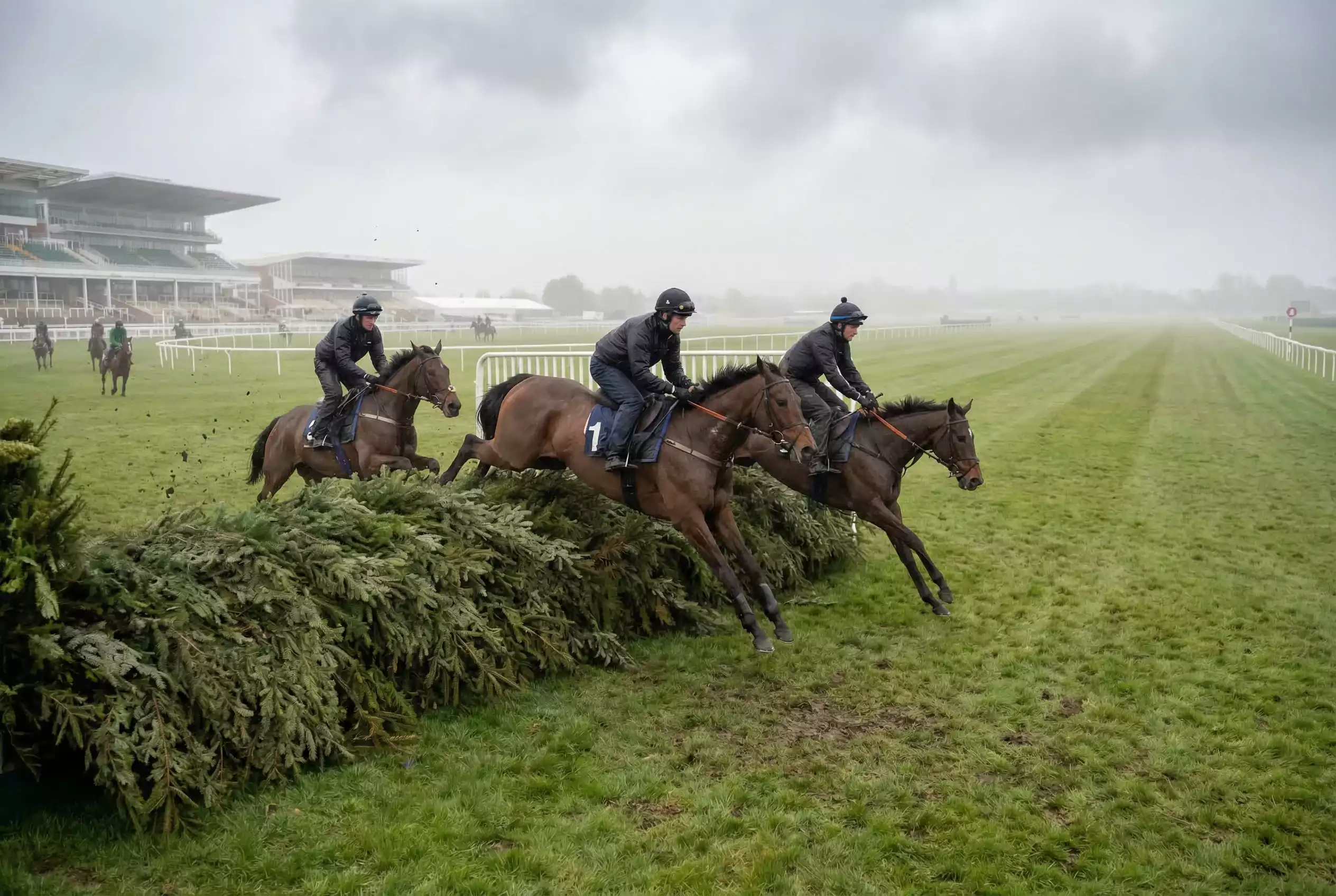
No race in British racing loses more horses between entry and the off than the Grand National. The world’s greatest steeplechase begins with over 100 entries in January and finishes with a maximum of 40 runners lining up at Aintree in April. That elimination funnel — part ballot, part injury, part tactical withdrawal — is the most concentrated non-runner event in the calendar, and for 2026 it operates under a new set of rules.
The shift to 72-hour declarations, up from the standard 48, gives the Grand National its own regulatory framework. Six reserve runners now stand by to replace late withdrawals, a system designed to keep the field as close to full capacity as possible. For punters, these changes alter the timeline of information, the structure of the ante-post market, and the way NRNB offers are triggered.
Understanding how the Grand National manages its entries, declarations, and non runners is not background reading. It is the operating manual for the biggest single betting event of the year.
From 100+ Entries to 40 Starters — The Grand National Elimination Funnel
The Grand National entry process is the most drawn-out in British racing. Initial entries close in late January, and in a typical year the list contains well over 100 horses. These are not speculative entries — trainers pay fees at each stage, and the BHA handicapper assigns weights — but the number far exceeds the 40 places available on the day.
The field is whittled down through a series of stages. First, the handicapper eliminates horses whose rating falls below the cut-off. Then, at the confirmation stage in February, trainers must reaffirm their intention to run and pay another entry fee. Horses carrying the lowest weights — those at the bottom of the handicap — are the most vulnerable to being balloted out if the field remains oversubscribed. The ballot is the National’s blunt instrument: if 45 confirmed runners remain for 40 places, the five lowest-weighted are removed.
This reduction happens against a broader backdrop. Average field sizes at Jump Premier meetings fell from 9.69 in 2023 to 9.22 in 2024, according to BHA data — a decline that reflects the shrinking population of top-class Jump horses. The Grand National, with its unique appeal and prize money, bucks this trend by attracting large entry numbers, but it still operates within an ecosystem where the pool of eligible horses is tightening.
By the time the field is finalised at the 72-hour declaration stage, the 100-plus entries have been distilled into 40 runners and 6 reserves. Every horse removed between entry and declaration is technically a non runner, but the punter’s exposure depends on when the bet was placed. Ante-post bets on horses that fail to make the final cut — through the ballot or through withdrawal before declarations — are settled as losers under standard ante-post rules. The money does not come back.
72-Hour Declarations for 2026 — Why the Grand National Gets an Extra Day
For 2026, the Grand National has moved to a 72-hour declaration window, extending the commitment period by a full day beyond the standard 48 hours used for other weekend fixtures. The change is accompanied by an increase in the number of reserve runners from four to six.
The 72-hour window means trainers must confirm their runners on the Wednesday before the Saturday race. That is three days of weather uncertainty, three days during which a horse could develop a minor issue, and three days during which the going at Aintree could change significantly. On paper, the longer window increases non-runner risk — the same dynamic that pushed NR rates up when 48-hour declarations were first introduced for weekend racing. In practice, the Grand National’s unique profile mitigates this somewhat: trainers who have spent months targeting the race are less likely to withdraw at the final stage unless the reason is genuinely compelling.
The rationale for 72 hours is partly commercial and partly logistical. The Grand National attracts more betting turnover than any other single race in the British calendar. International operators, who account for a growing share of that turnover, need the extended window to build markets, promote the race, and handle the volume of wagers that flow in from Asia, Australia, and beyond. Logistically, the larger field and the complexity of the reserve system also benefit from an extra day of lead time.
For punters, the 72-hour window means the final field is known earlier — Wednesday rather than Thursday — which gives an additional day to reassess positions, check the going, and adjust or hedge bets. It also means that Wednesday evening through Thursday morning is the critical period for non-runner announcements. By Thursday afternoon, the card for Saturday is effectively locked, barring late withdrawals that trigger the reserve system.
Six Reserve Runners — How the Replacement System Works
The reserve system is the Grand National’s mechanism for keeping the field at or near its 40-runner limit even after late withdrawals. For 2026, six horses are designated as reserves — up from four previously — ranked by their position in the handicap.
When a declared runner is withdrawn after the 72-hour deadline, the highest-ranked reserve steps in to take its place. The replacement horse inherits the withdrawn horse’s starting position and is subject to the same race-day conditions. The process continues down the reserve list: if two horses are withdrawn, the top two reserves join the field. If none are withdrawn, the reserves do not run.
The expansion from four to six reserves reflects a practical reality. In recent years, late withdrawals from the Grand National have occasionally left the field short of 40 runners, which diminishes the spectacle and reduces the competitive depth of the race. Six reserves provide a deeper buffer against last-minute pull-outs, whether caused by going changes, overnight illness, or a trainer’s change of heart after walking the course on Friday.
For punters, the reserve system creates an unusual betting dynamic. A reserve horse may have been available at much longer odds in the ante-post market, priced on the assumption that it would not make the final field. If that horse steps in as a replacement, its odds may shorten rapidly — or may not, depending on whether the market had already priced in the possibility. Monitoring the reserve list alongside the main declarations gives you a view of potential late additions that most casual bettors overlook.
Reserves also interact with NRNB offers. If your original selection is withdrawn and replaced by a reserve, the NR applies to your bet — your horse did not run — and the NRNB terms (if applicable) are triggered. The reserve runner’s entry into the field is a separate event that does not affect the settlement of your original bet.
Famous Grand National Non Runners — From Ballot to Injury
The Grand National’s history is littered with high-profile non runners, and each one carries a story that illustrates a different facet of the withdrawal process.
The ballot is the most common cause of Grand National non runners at the entry stage. Horses that are good enough to be entered but carry low weights face the annual lottery of the cut-off. Trainers know the risk when they enter — and owners know the disappointment when the handicapper’s line falls just above their horse. The frustration is compounded for ante-post punters who backed the horse months earlier, only to lose their stake to a ballot rather than a race result.
Injury withdrawals closer to race day create a different kind of drama. A horse that has been the subject of ante-post market attention for weeks, has been the focus of press coverage and punter enthusiasm, and then is pulled out 48 or 72 hours before the race generates headlines that ripple through the market. The remaining field reprices, Rule 4 deductions are signalled, and the race dynamic shifts.
Going-related withdrawals are the third category. The Grand National is run over four miles and two furlongs of the most demanding fences in the sport. Soft or heavy going makes the race even more attritional, and trainers with horses that lack stamina on testing ground will withdraw rather than risk their animal over the most punishing course in Jump racing. When Aintree gets rain in the days before the National, the NR list tends to grow.
Each of these scenarios — ballot, injury, going — affects the punter differently, but the underlying lesson is the same. The Grand National is not a race where you can assume the field is settled until the declarations deadline has passed. Even then, late withdrawals can reshuffle the card in the final hours.
NRNB for the Grand National — Bookmaker Offers and Conditions
The Grand National is the centrepiece of NRNB marketing in UK betting. Every major bookmaker offers some form of Non Runner No Bet protection for the race, and the competition between operators to attract National ante-post bets is fierce.
The standard Grand National NRNB offer covers ante-post bets placed on runners who subsequently fail to line up. If your horse is declared a non runner — whether through withdrawal, ballot, or the reserve system not reaching that far — your stake is returned. The refund mechanism varies: some bookmakers return the stake as cash, others as a free bet credited to your account. The difference matters. A cash refund is immediately withdrawable. A free bet typically carries conditions — a minimum odds requirement, an expiry date, and the stake is not returned with winnings.
The qualifying window for Grand National NRNB usually opens months before the race, as soon as ante-post markets are published. It closes at a specified time before the off — often at the 72-hour declaration deadline, sometimes earlier. Bets placed after the cut-off are treated as day-of-race bets and do not need NRNB, since standard NR refund rules apply.
One important condition: NRNB offers typically apply to win bets and each-way bets, but not to forecast, tricast, or speciality markets. If you placed a Tricast that includes a non runner, the settlement follows the bookmaker’s standard speciality-bet terms rather than the NRNB promotion. For the Grand National specifically, where novelty bets and large-field exotics are popular, this is a detail worth confirming before you commit.
Given the Grand National’s unique 72-hour declaration window and six-reserve structure, the interplay between NRNB and late substitutions can be confusing. The cleanest approach is simple: check that your specific bet qualifies for NRNB at the point of placement, and confirm the refund terms. The bookmaker’s promotional page for the Grand National will list the conditions explicitly.
Grand National Non Runners — More on this topic at non runners horses today.
See also Royal Ascot Non Runners.
