

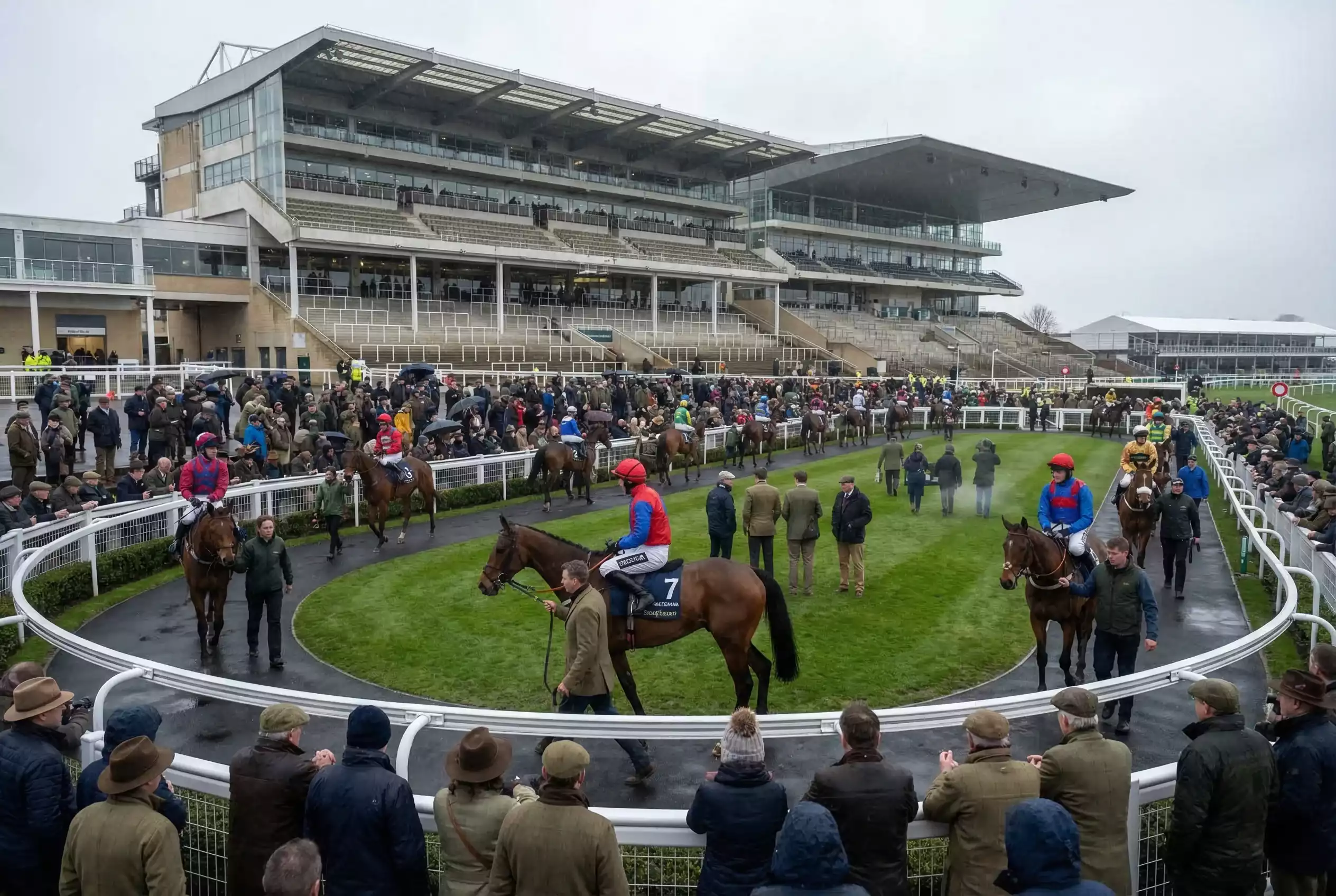
Cheltenham Festival is the biggest week in Jump racing, and it is also one of the most volatile for non runners. Four days, 28 races, fields packed with the best National Hunt horses in Britain and Ireland — and a weather system in March that can turn Prestbury Park into a swamp overnight. Every year, high-profile withdrawals reshape the betting landscape in ways that ante-post punters feel most acutely.
The stakes at Cheltenham are higher than anywhere else in the calendar. Prize money runs into millions. Trainers travel horses from Ireland that have been aimed at specific races for months. And when the going shifts or a horse picks up a bug in the stable, the decision to withdraw is not just about one race — it is about protecting an animal worth six or seven figures. The result is a festival week where NR announcements arrive like weather bulletins, each one triggering a market cascade.
For the punter, Cheltenham’s NR patterns are not random noise. They are predictable enough to plan around, provided you know where to look and what to check.
Cheltenham Non Runner Numbers — What the Data Shows
Cheltenham’s non-runner numbers fluctuate year to year, driven primarily by weather and the health of the horse population — but the trend line tells a consistent story. This is a festival where withdrawals are not the exception. They are a structural feature of the week.
The 2024 Festival provided a stark illustration. Nicky Henderson, the most decorated active trainer in Jump racing, withdrew seven horses from the meeting due to illness in his yard. The entries included some of the most heavily backed horses in the ante-post markets, and the estimated potential prize money lost across those withdrawals was around £1.3 million. For punters who had backed Henderson’s runners ante-post without NRNB protection, the cost was irrecoverable.
Total prize money at the Cheltenham Festival reached £4.93 million in 2025, underlining the financial gravity of every declaration and every withdrawal. When a trainer pulls a horse from a Grade 1 race at Cheltenham, the ripple extends beyond the punter — jockeys lose rides, owners lose opportunities, and the race itself often becomes less competitive.
Year-on-year, the NR count at Cheltenham tends to be higher than the national average for Jump racing. Part of this is structural: the 48-hour declaration window means trainers must commit on the Sunday or Monday for races on Tuesday through Friday, and March weather in the Cotswolds is notoriously unreliable. Part of it is strategic: trainers with multiple entries across the week may withdraw from one race to redirect resources to another, particularly when the going favours one horse over another. The result is a festival where the racecard is never truly settled until the morning of each day.
High-Profile Cheltenham Withdrawals — Henderson 2024, Shishkin and Beyond
Henderson’s 2024 withdrawals were the most prominent recent example, but Cheltenham has a long history of high-profile non runners that reshaped the betting on the day.
Shishkin, one of the most talented two-mile chasers of his generation, was among Henderson’s 2024 batch of withdrawals. The horse had been a leading ante-post contender for the Champion Chase, and his absence opened the race up dramatically. Constitution Hill, the reigning Champion Hurdler, was another casualty from the same yard — a withdrawal that would have been headline news in any other week but was overshadowed by the sheer volume of Henderson’s NR list.
The pattern is not exclusive to Henderson. Willie Mullins, who has dominated the festival in recent years, regularly withdraws entries across the week as conditions evolve. A trainer with 60 or 70 entries spread across all four days is, by definition, going to pull some of them — the question is which ones and when. These withdrawals are not signs of chaos; they are strategic decisions made by trainers managing large strings of horses across an intense programme.
For the punter, high-profile non runners carry a specific risk beyond the voided bet. They reshape the market in ways that are not immediately obvious. When a short-priced favourite is withdrawn, the remaining field compresses. Second and third favourites shorten. Outsiders that were value at 16/1 suddenly look less appealing at 10/1 because the competitive dynamic has shifted. The NR does not just remove a horse — it changes every price on the card.
Following trainer news in the weeks before the festival — stable tours, press interviews, whispers about the going preference of specific horses — is the best early-warning system available. By the time the NR appears on the racecard, the market has already reacted. The punter who spotted the risk earlier had a window to act.
NRNB at Cheltenham — Which Bookmakers Offer Festival Protection
Non Runner No Bet offers peak during Cheltenham week. Every major UK bookmaker runs some form of NRNB promotion for the festival, though the terms vary significantly between operators.
The standard NRNB offer works like this: place an ante-post bet on a Cheltenham race, and if your horse is declared a non runner, your stake is returned — either as cash or as a free bet, depending on the bookmaker. The refund applies to the specific qualifying bet and does not extend to other bets you may have placed on the same race or meeting.
Where the differences emerge is in the qualifying conditions. Some bookmakers offer NRNB on all 28 Cheltenham races. Others restrict it to selected contests — typically the Grade 1 championship races like the Champion Hurdle, Queen Mother Champion Chase, Stayers’ Hurdle, and Gold Cup. A few extend NRNB to the full festival but cap the maximum stake that qualifies — £25 or £50 being common limits. The breadth of coverage and the cap on qualifying stakes are the two variables to compare when choosing where to place your festival bets.
The timing of the offer also matters. Most bookmakers open NRNB from the ante-post stage — weeks or even months before the festival — and close it at a specified cut-off, sometimes 48 hours before the first race. Bets placed after the cut-off may not qualify. Checking the exact window is essential, particularly for punters who like to wait for market moves before committing.
Cheltenham Weather — How March Rain Drives Non Runners
Cheltenham sits in a bowl at the foot of Cleeve Hill in the Cotswolds, and its geography makes it a magnet for rainfall. March is one of the wettest months of the year in the region, and when rain arrives during festival week, it can transform the going from good to soft — or soft to heavy — in a matter of hours.
The going is the single largest driver of non runners at Cheltenham. Trainers who have spent months preparing a horse for a specific race will not risk it on ground that does not suit the animal. A quick-ground specialist aimed at the Champion Chase becomes a non runner when the forecast turns. A horse with a tendon concern that would be manageable on good ground becomes too risky on soft. The weather acts as an amplifier for every underlying vulnerability in the field.
The course’s drainage has improved over the years — Cheltenham invested in a new drainage system that has helped manage waterlogging — but no racecourse can fully insulate itself from sustained heavy rain. When the forecast for festival week shows persistent fronts moving in from the west, the non-runner count rises predictably.
For punters, the weather forecast is the first check in the morning and the last check at night during festival week. The Met Office and specialist racing weather services provide hourly updates for the Cheltenham area. Cross-referencing those forecasts with the going preferences of your selections gives you the clearest possible picture of NR risk before the official declarations arrive.
Festival Week Checklist — Spotting Non Runner Risk Before the Off
Festival week moves fast, and the punters who navigate it best have a routine. Here is what to monitor and when.
In the weeks before the festival, track stable news. Trainer interviews, stable tours published by racing media, and social media updates from yards give the earliest signals of potential problems. If a trainer mentions a horse is only being considered for Cheltenham rather than confirmed, that is a flag. If the going preference is stated explicitly — this horse needs good ground, that one hates soft — note it and cross-reference it with the long-range forecast.
In the days before each race, watch the going report. Cheltenham publishes official going updates through its website and social media channels, and the clerk of the course provides regular commentary on how the ground is riding. A shift from good to good-to-soft the day before a race is a warning that soft-ground non runners may follow. A shift in the other direction — rare in March but not impossible — may shake loose withdrawals from horses that need cut in the ground.
On the morning of each day, check the racecard between 7am and 9am. This is when the bulk of festival-day non runners are declared. A second check around 10:30am catches any late changes. The final declarations window closes approximately one hour before the first race, but the most significant moves happen early.
Finally, check your NRNB status. If you hold ante-post bets with NRNB protection, confirm that the terms still apply and that your bets were placed within the qualifying window. If you hold ante-post bets without NRNB, understand that a non runner means a lost stake — and decide whether to hedge on the exchange or accept the risk. Festival week rewards preparation. The NR list punishes the unprepared.
Cheltenham Festival Non Runners — More on this topic at non runners horses today.
See also Grand National Non Runners.
